Guide
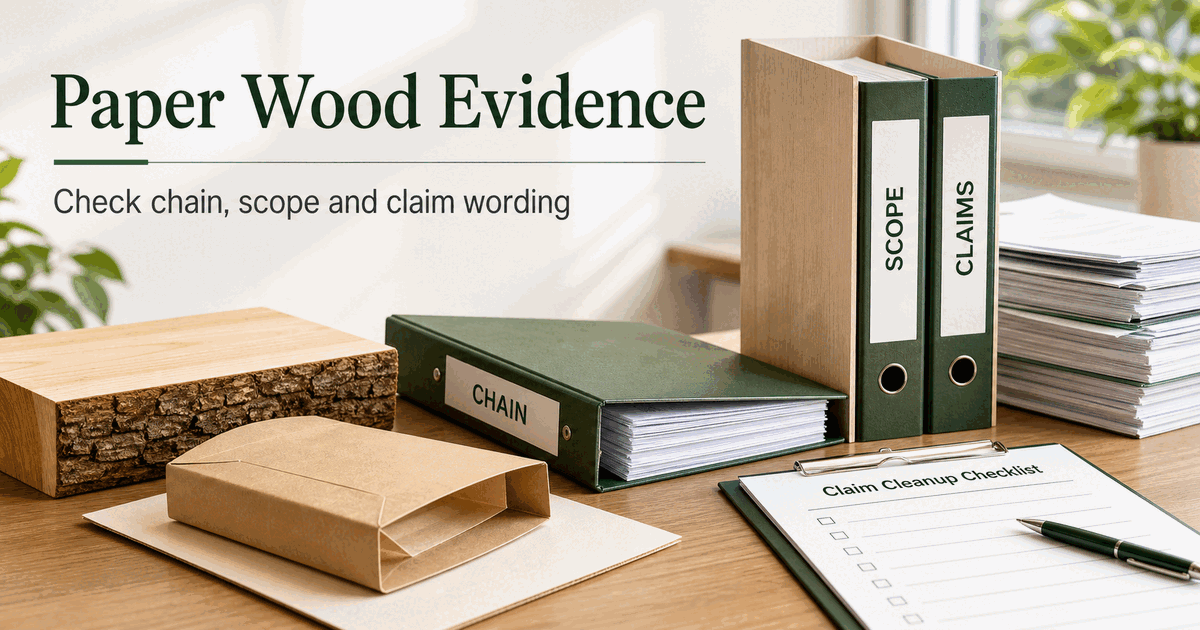
FSC Paper and Wood Evidence Chain Review Before Publishing Legacy Copy
FSC can support paper, wood, packaging and printed-product claims, but it should not be written as a universal green-label shortcut.
Read moreGreenArk latest news: industry updates, company news, guides
FSC can support paper, wood, packaging and printed-product claims, but it should not be written as a universal green-label shortcut.
Read more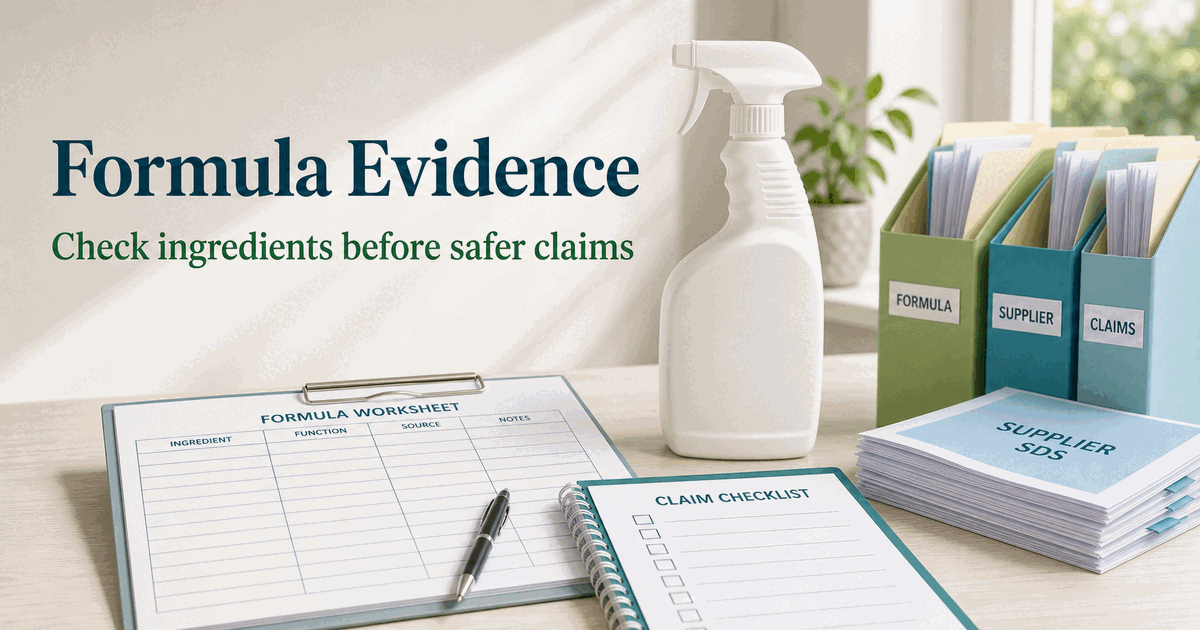
EPA Safer Choice should not be treated as a broad “natural cleaning” marketing label. For cleaning, laundry, household, pet care, and related chemical products, the evidence review usually starts with product category, c
Read more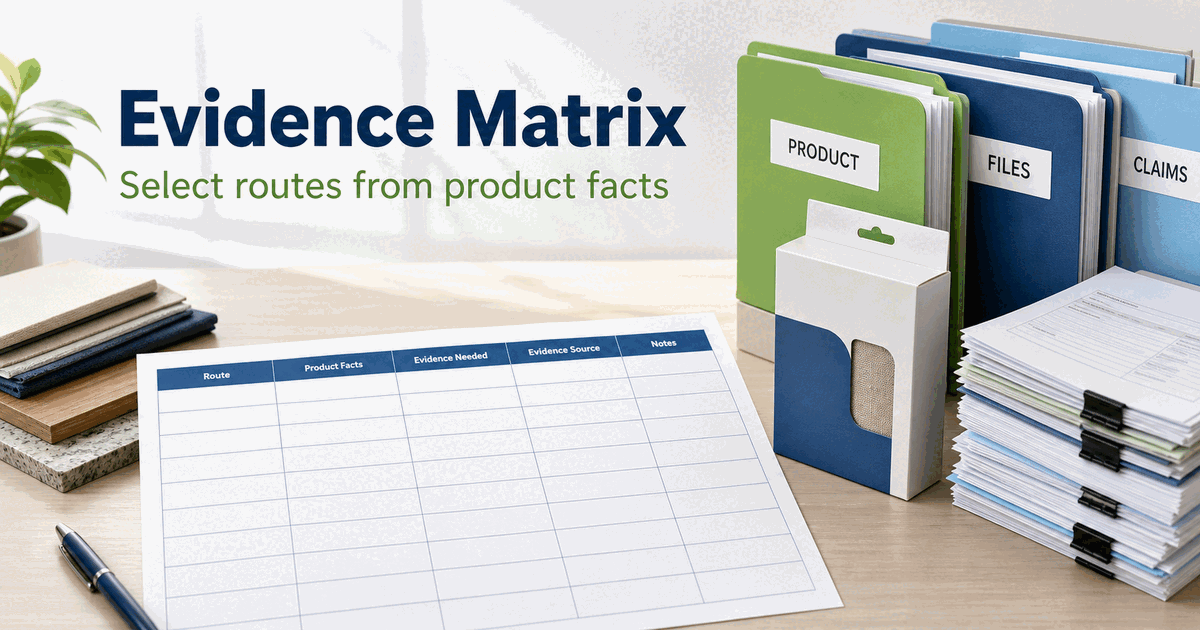
Amazon Climate Pledge Friendly is often discussed as a list of sustainability certifications. For sellers, that view is too narrow.
Read more
Amazon Climate Pledge Friendly content should not start with outcome claims or a fixed certification list. Sellers should first check whether a product has verifiable evidence for a CPF pathway.
Read more
Cradle to Cradle Certified files are often used in circular economy, material health, and sustainability claim documentation. Before using them for Amazon CPF or product-page copy, sellers should separate Full Scope cert
Read more
B Corp evidence should not be treated as a product-level sustainability label. Product claims still need product-level support.
Read more
Carbon Trust labels can be part of a carbon-footprint evidence chain, but they should not be presented as a fixed Amazon CPF outcome.
Read more
A carbon footprint report, offset record, or climate label is not enough by itself. The evidence must support the exact claim subject, standard version, time period, product scope, and SKU mapping.
Read more
Recycled content, recyclability, circular design, and pre-owned or refurbished status each require different documentation.
Read more
Compact by Design is an Amazon-created sustainability feature pathway for products with more efficient designs.
Read more
GOTS, OEKO-TEX STANDARD 100, and bluesign / bluepass should not be treated as interchangeable textile labels.
Read more
ENERGY STAR can be relevant for Amazon sellers of energy-using products, but it should not be presented as a fixed CPF outcome.
Read more
For Amazon sellers, a carbon-neutral pathway should not start with a certificate name. It should start with a claim boundary.
Read more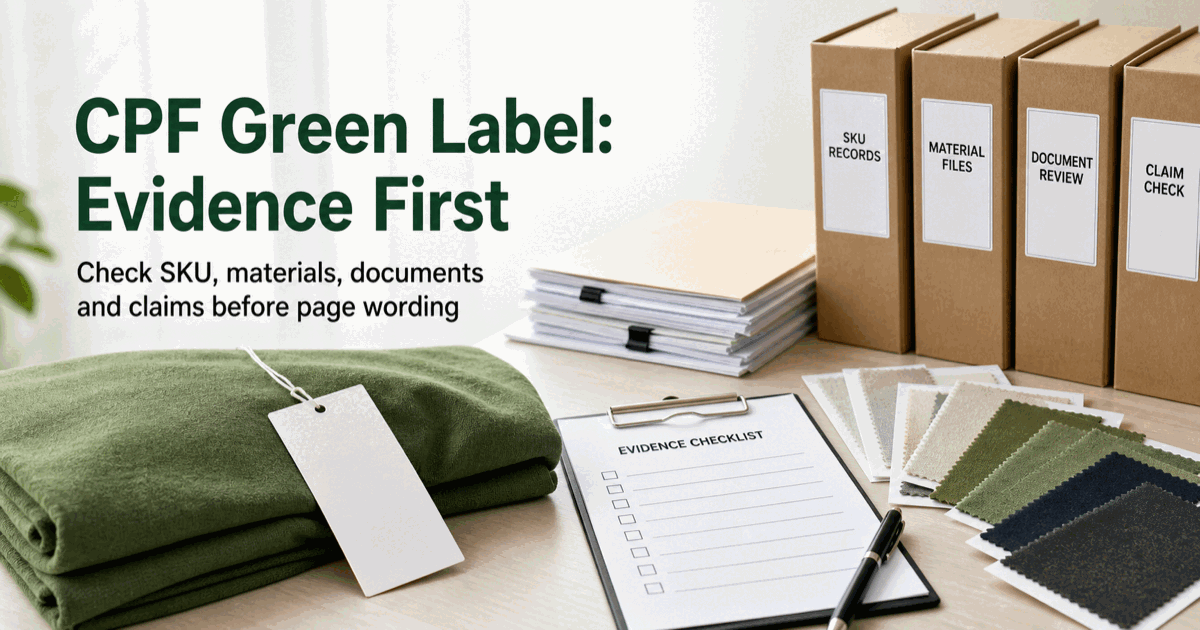
Amazon Climate Pledge Friendly is not a single certification. It is a program that helps customers identify products with recognized sustainability features, including third-party certifications and Amazon-created paths
Read more
On December 12, 2025, Textile Exchange released the Materials Matter Standard (MMS), document reference TE-MM-STN-101-V1.0. The transition affects GRS and RCS evidence chains used by Amazon sellers for Climate Pledge Friendly documentation, especially where certificate scope, transaction certificates and ASIN claims must remain aligned.
Read more
Amazon Climate Pledge Friendly (CPF) is connected to recognized sustainability certifications and product evidence. For sellers, the work is not simply uploading one certificate. The safer route is to align product scope, certificate scope, material or carbon data, and ASIN page claims.
Read more
The EU Deforestation Regulation (EUDR) requires in-scope commodities and relevant products placed on the EU market to be supported by due diligence. For cross-border sellers, the practical task is not only to know the regulation name, but to connect product scope, HS code review, supplier documents and traceability records before shipment.
Read more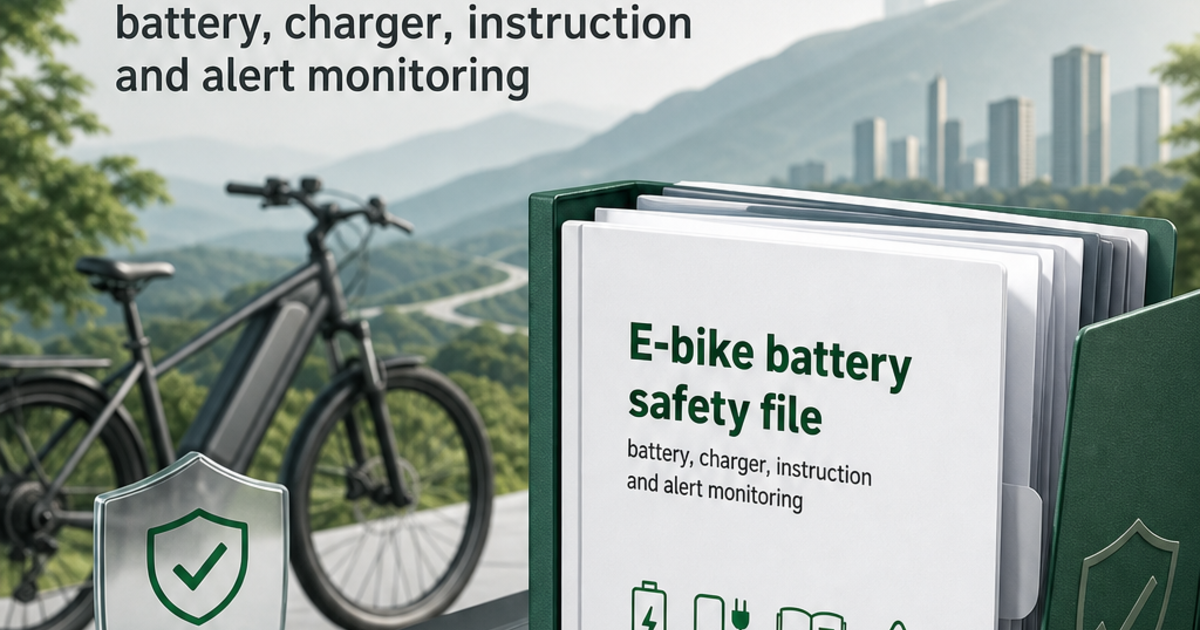
Data checked on 2026-08-04. This article is based on OPSS regulatory activity, OPSS statutory guidelines, UK recall and alert materials, UK GPSR context and Greenark service boundaries.
Read more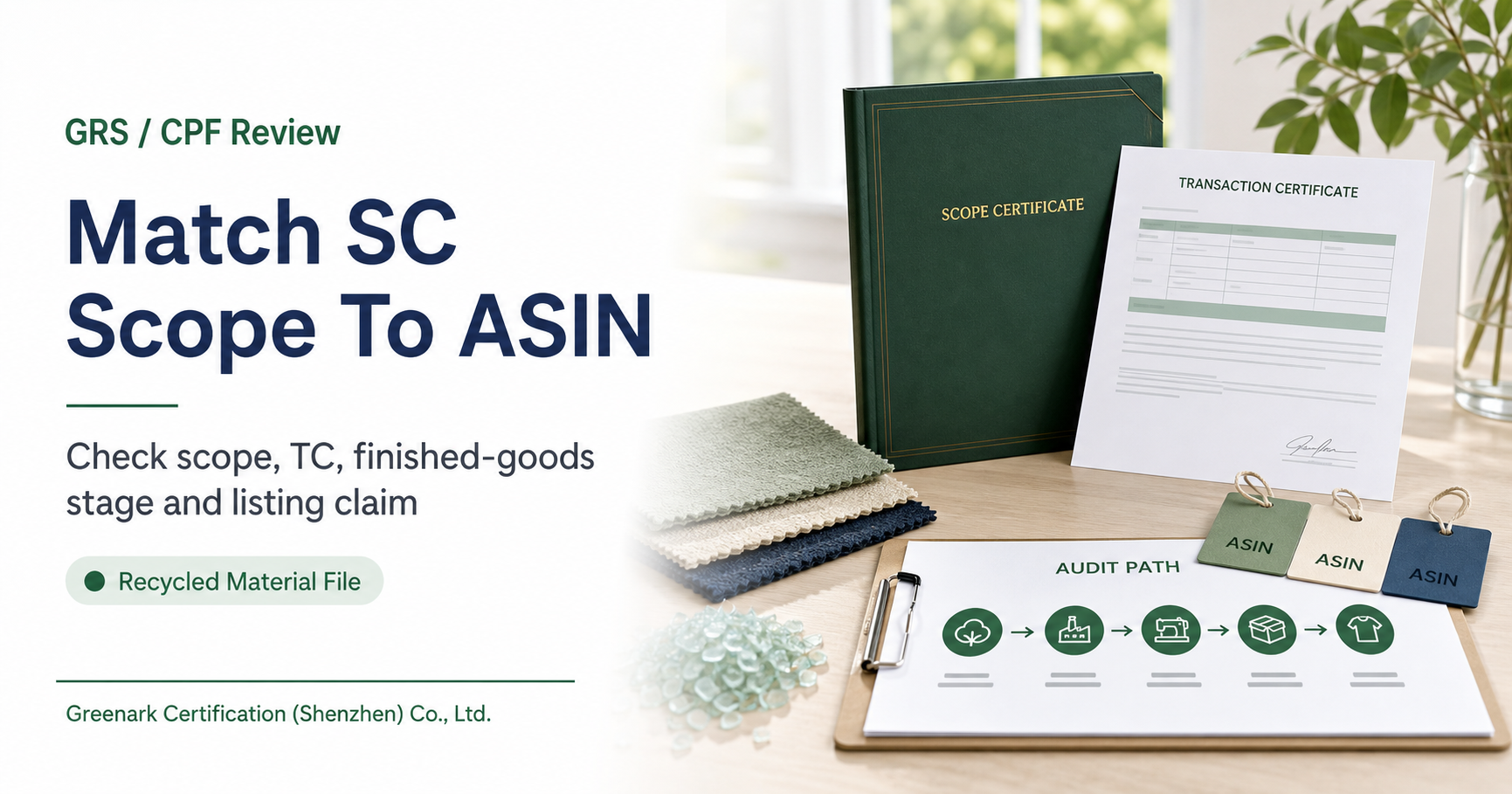
A seller of recycled polyester bags came with a supplier GRS certificate, but the scope covered recycled polyester yarn rather than finished bags. The practical review point is whether the SC scope, TC chain, finished-goods process and ASIN listing claim match each other.
Read more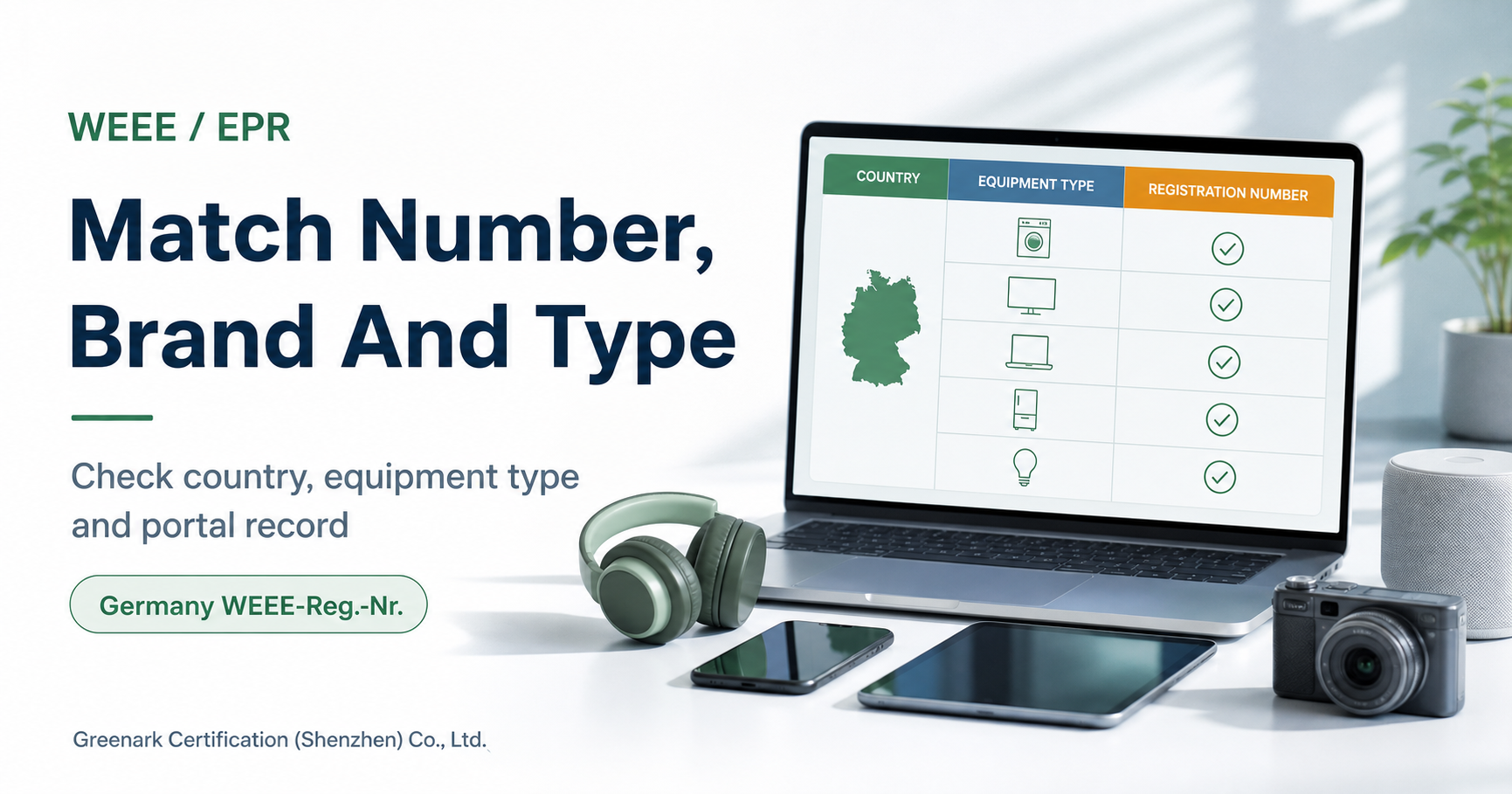
The EU WEEE Directive addresses the collection, treatment, recycling and producer responsibility of waste electrical and electronic equipment. For cross-border electronics sellers, the common operational issue is not the name of the directive. It is whether brand, equipment type, sales country, authorised representative, registration number and platform field match each other.
Read more