News

GreenArk latest news: industry updates, company news, guides

Certification Budget Planning: Reducing Duplicate Tests and Documents
Guide

Certification Budget Planning: Reducing Duplicate Tests and Documents

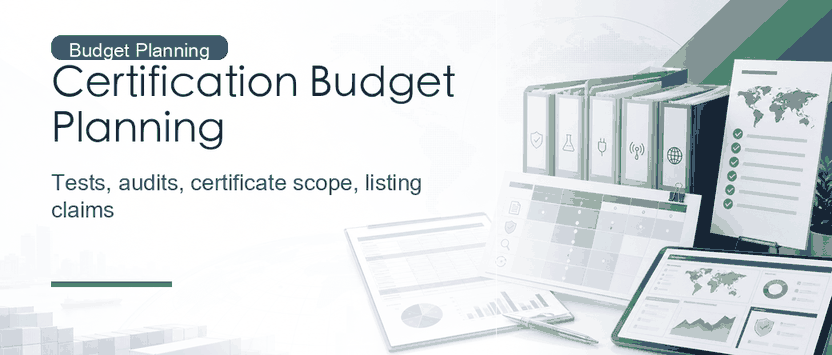
Certification budget planning should not promise the lowest cost. The key is to define target markets, category risks, certificate scope, and conditions for document reuse. Sellers can reduce duplicated work through early classification, combined testing plans, supplier-document reuse, and certificate-scope control without weakening compliance review.

Read more


FSC Certification Review: CoC Records, Transaction Claims, and Trademark Use
Industry

FSC Certification Review: CoC Records, Transaction Claims, and Trademark Use

FSC certificate maintenance depends on chain-of-custody records, supplier status, transaction claims, material segregation, outsourcing control, and trademark use. Companies should maintain traceable records and regular self-checks instead of relying on unverified statistics, certificate-status rates, or fear-based forecasts.

Read more
Japan Marketplace Compliance: PSE, Product Safety, and Labelling Records
Guide

Japan Marketplace Compliance: PSE, Product Safety, and Labelling Records

Japan marketplace compliance should start by classifying whether the product falls under PSE, the Electrical Appliance and Material Safety Act, the Consumer Product Safety Act, food sanitation, PMD Act, or labelling rules. Sellers should check importer responsibility, test reports, labels, manuals, and listing claims instead of applying PSE or local-representative requirements across the catalogue.

Read more
EU Battery Regulation: Carbon Footprint and Battery Data Readiness Checklist
Guide

EU Battery Regulation: Carbon Footprint and Battery Data Readiness Checklist

Regulation (EU) 2023/1542 introduces phased requirements for battery carbon footprint, digital battery passports, labelling, recycling, and due diligence. Sellers should first classify battery type, capacity, intended use, and responsible party, then prepare material, production, transport, and supply-chain data instead of assigning a single schedule to all power banks.

Read more
CBAM Data Readiness: Emissions Records Needed by EU Importers
Guide

CBAM Data Readiness: Emissions Records Needed by EU Importers

The EU CBAM currently covers specified goods in sectors such as cement, iron and steel, aluminium, fertilisers, electricity, and hydrogen, with scope determined by CN code and the legal list. Exporters should prepare product, installation, production route, direct and indirect emissions, input material, and calculation-boundary records instead of publishing unconfirmed cost ratios or expansion timelines.

Read more
How Sustainability Evidence Supports Brand Storytelling: Claim Boundaries
Guide

How Sustainability Evidence Supports Brand Storytelling: Claim Boundaries

Sustainability certificates and test records can support brand storytelling, but they should not be presented as assured commercial outcome promises. Sellers should map certificate scope, material source, supply-chain files, and listing wording so listings, A+ content, packaging, and social assets do not overstate claims.

Read more
2026 Sustainable E-Commerce Readiness: Evidence, Data, and Claims
Industry

2026 Sustainable E-Commerce Readiness: Evidence, Data, and Claims

Sustainable e-commerce readiness should not depend on platform distribution statements or unverified assumptions. Sellers should focus on certificate scope, material data, packaging, supply-chain records, regulatory data, and listing-claim consistency instead of presenting certification as an entry threshold, search advantage, or commercial-result promise.

Read more
EU Digital Product Passport: DPP Data Readiness Checklist
Industry

EU Digital Product Passport: DPP Data Readiness Checklist

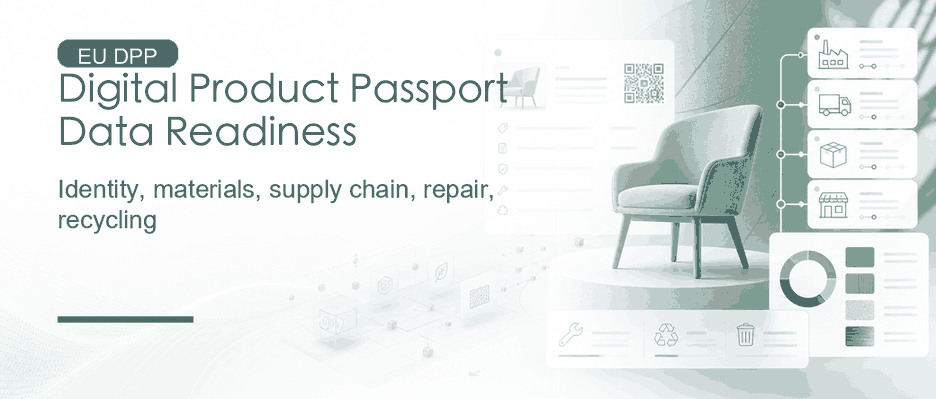
The Digital Product Passport is a data tool in the EU sustainable products framework, with product scope, fields, and dates to be set progressively by product-group rules. Companies should prepare product identity, material, supply-chain, repair, recycling, and compliance evidence instead of stating that different product groups follow one identical schedule.

Read more