News

GreenArk latest news: industry updates, company news, guides

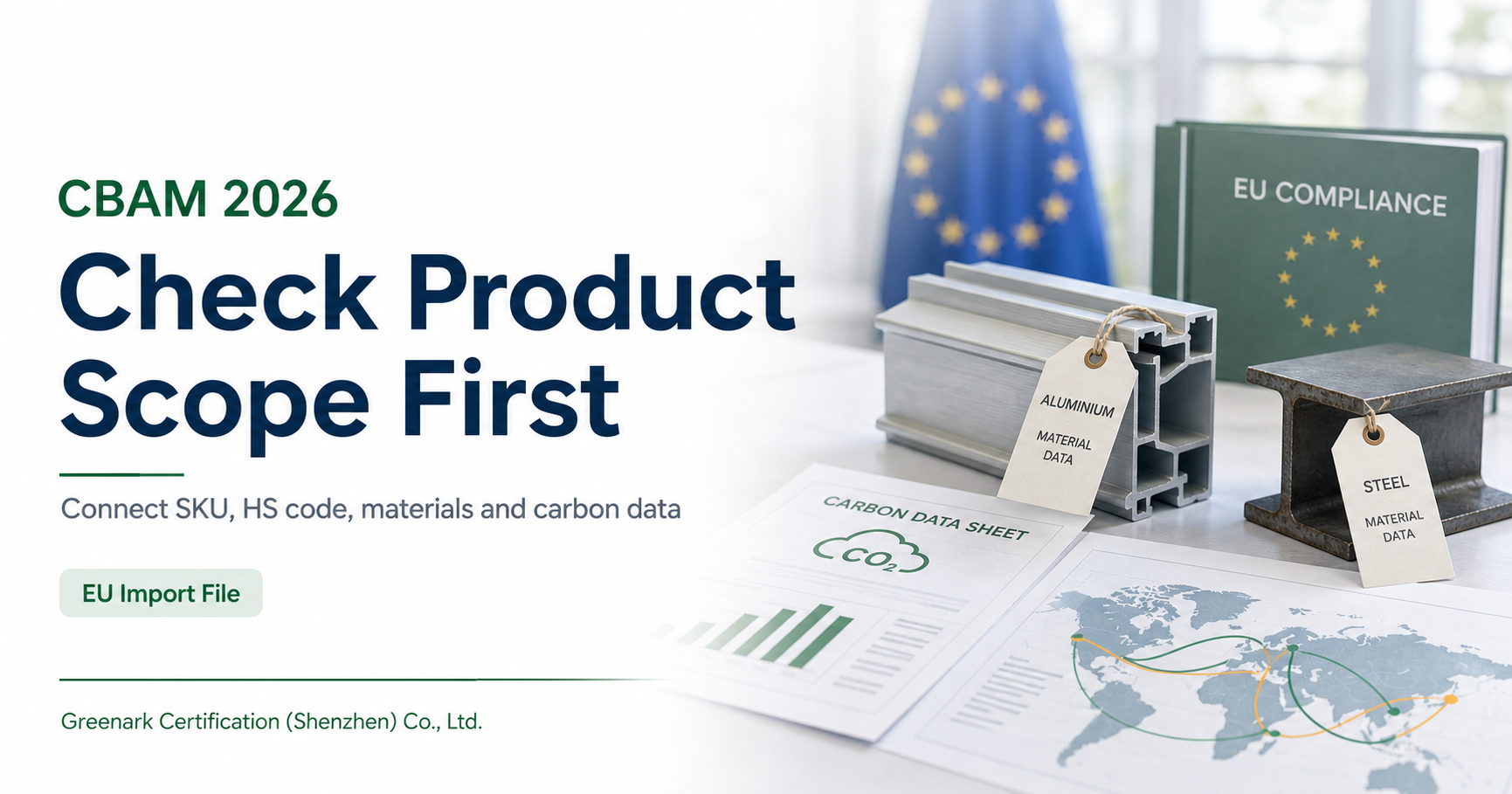
EU CBAM 2026 Definitive Regime: Product Scope and Carbon Data Checks for Cross-Border Sellers
Guide

EU CBAM 2026 Definitive Regime: Product Scope and Carbon Data Checks for Cross-Border Sellers

The EU Carbon Border Adjustment Mechanism ran a transitional reporting phase from 2023 to 2025 and applies under its definitive regime from 1 January 2026. For cross-border sellers, the practical first step is not to treat every EU-bound item as a carbon-duty case. The team should first confirm whether the goods fall within the current CBAM scope, who acts as the EU-side declarant or importer, and whether suppliers can provide traceable production, material and emissions records.

Read more
Amazon CPF and Green Claim Evidence Check Before Updating Listing Copy
Guide

Amazon CPF and Green Claim Evidence Check Before Updating Listing Copy

Amazon describes Climate Pledge Friendly as a program that helps customers discover products with sustainability features. That is a useful marketplace signal, but it does not mean every environmental phrase can be used freely on a listing. A seller still needs to connect the claim to the product, certification scope, document version, and exact listing wording.

Read more
FSC Certificate Scope Mismatch: A Hidden Cause of Amazon CPF Green Label Rejection
Guide

FSC Certificate Scope Mismatch: A Hidden Cause of Amazon CPF Green Label Rejection

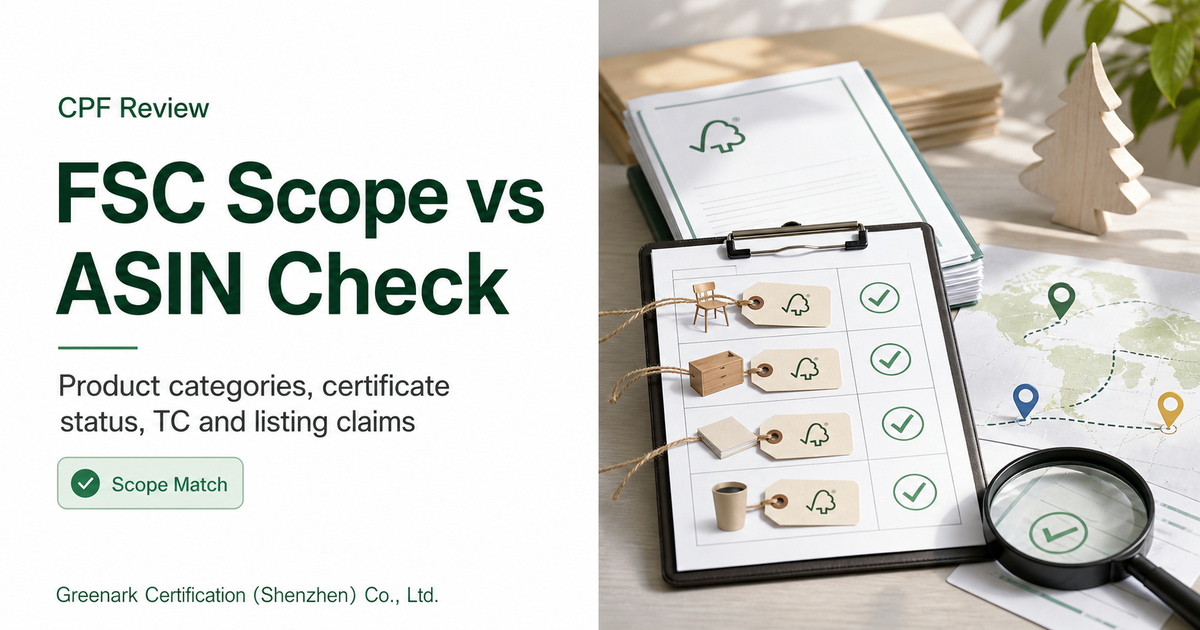
The Forest Stewardship Council (FSC) Chain of Custody (CoC) certificate includes a Scope section with a "Product Categories" field that explicitly lists the specific product categories covered by the certification. When a supplier's FSC certificate Scope lists product categories that do not match the seller's ASIN product type, a "Scope mismatch" occurs.

Read more
Why Your Amazon CPF Green Label Application Gets Rejected: 5 Common Evidence Chain Gaps | Greenark Certification
Guide

Why Your Amazon CPF Green Label Application Gets Rejected: 5 Common Evidence Chain Gaps | Greenark Certification

When Amazon Climate Pledge Friendly (CPF) green label applications are rejected, the root cause is usually not the product itself but a broken evidence chain in the submitted certification materials. This article breaks down 5 of the most common resubmission gaps: Scope not covering ASIN, broken TC chain, company information mismatch, material description mismatch, and one certificate bound to multiple ASINs without explanation. Each gap includes specific diagnostic methods and repair paths to help sellers fix the evidence chain before resubmitting.

Read more
US FDA Food Contact Materials: FCN and Amazon Evidence Checklist
Guide

US FDA Food Contact Materials: FCN and Amazon Evidence Checklist

Food contact material compliance affects packaging, kitchenware, containers, utensils, and other products that may touch food. For Amazon sellers, the operational question is not only whether a supplier says a material is food grade, but whether the material, test report, legal basis, label, and listing wording point to the same product and use scenario.

Read more
EU ESPR Ecodesign Rules: DPP Evidence Preparation for Cross-Border Sellers
Guide

EU ESPR Ecodesign Rules: DPP Evidence Preparation for Cross-Border Sellers

The EU Ecodesign for Sustainable Products Regulation (ESPR) has moved product sustainability from a narrow energy-efficiency topic into a broader lifecycle evidence requirement. For cross-border sellers, the Digital Product Passport (DPP) is the practical signal: product data, material information, repair or recycling information, and claim evidence must be traceable before the item is placed on the EU market.

Read more
AI Listing Optimization Needs Evidence Boundaries
Guide

AI Listing Optimization Needs Evidence Boundaries

AI tools, A+ content upgrades and image improvements are useful for Amazon sellers, but they do not replace Seller Central rules or product evidence. Titles, bullet points, product images, A+ modules and videos are all customer-visible claim surfaces.

Read more