
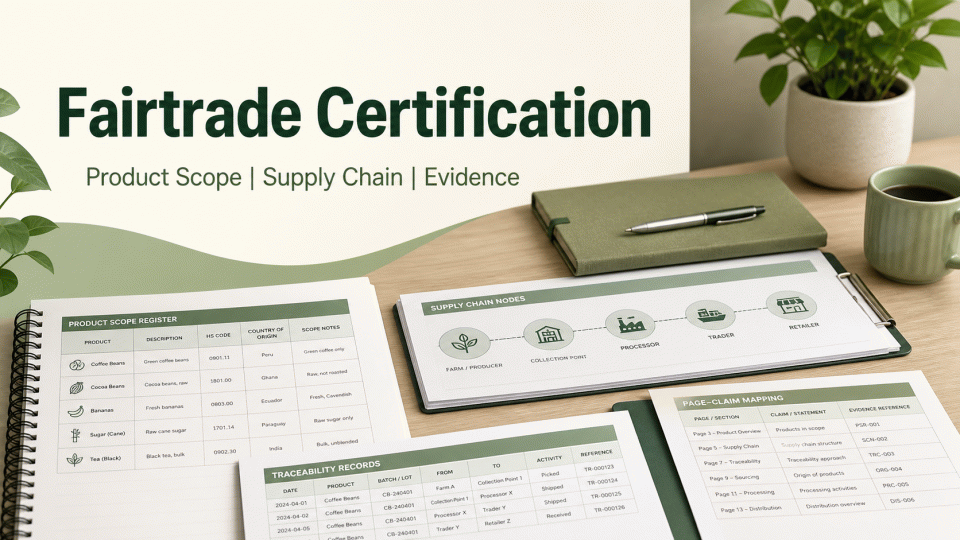
Fairtrade is not a generic certificate that can be separated from the product and its supply chain. Before using a Fairtrade statement on a page or package, define the product scope, identify each supply-chain role, and confirm which Fairtrade Standard applies.
1. Define the certified object and applicable Standard
Fairtrade International publishes different Standards for different participants and contexts, including small producer organizations, hired-labour organizations, contract production, and traders. Product-specific Standards may also apply. A brand, importer, exporter, manufacturer, or retailer should first describe its role in the chain rather than submit only a brand name.
Build a product–ingredient–role–seller–claim register. Record the SKU, recipe or fibre composition, producer organization, processing and trading steps, target market, packaging version, and intended Fairtrade wording or mark. Food, cotton, and textile products can have different scope, composition, and traceability rules; evidence should not be transferred between them without checking the relevant Standard.
2. Read the requirements and audit scope correctly
Fairtrade Standards cover social, economic, and environmental requirements, including trading relationships, production conditions, risk management, and supply-chain responsibilities. The Trader Standard also addresses product composition, traceability, trading transparency, Fairtrade Minimum Price, Fairtrade Premium, and rules connected with the FAIRTRADE Mark. Use the applicable product Standard and current version for the detailed requirements.
Independent certification body FLOCERT carries out Fairtrade certification audits. Fairtrade describes audits that may include physical inspections, document and financial-record review, and confidential staff interviews. An audit conclusion is tied to the audited organization, site, product, or supply-chain scope; it should not be expanded into a conclusion about every SKU, brand, or market.
Keep an evidence index with the Standard name and version, certified entity and address, certificate or customer reference, scope, products or ingredients, supply-chain nodes, audit or permission status, document dates, and the related package and listing versions. Recheck the scope when suppliers, recipes, factories, processing steps, or packaging change.
3. Map evidence to page and packaging claims
Break every customer-facing sentence into three questions: Which product or ingredient does it describe? Which Fairtrade requirement, permission, or supply-chain record supports it? Which FAIRTRADE Mark or wording will the customer see? The title, image, composition or material description, package artwork, and product data should describe the same scope.
A brand that wants to use the FAIRTRADE Mark on a finished product must also confirm the licensing relationship and mark-use guidance. Fairtrade distinguishes supply-chain certification from brand licensing: licensees source from Fairtrade-certified operators and register products under the applicable agreement and rules. Do not reproduce or alter the official mark without written permission.
“Contains a Fairtrade ingredient,” “uses the FAIRTRADE Mark,” and “the supplier participates in a Fairtrade supply chain” are different statements. Check composition or fibre content, physical traceability or mass-balance model, transaction records, licensing or registration status, and final packaging artwork separately.
4. Five manual checks before submission
- Confirm the product category, ingredients or fibres, and target market, then select the correct current Fairtrade Standard.
- Match producers, processors, traders, brands, and importers across certificates, contracts, and page content.
- Index purchasing, invoices, transactions, traceability, composition, and packaging records to the specific SKU.
- Review every claim for scope inflation and remove unsupported statements such as “all products” or “globally applicable.”
- Retain audit, permission, mark-approval, and version-change records. Ask FLOCERT, the local Fairtrade organization, or the rights holder when the evidence is unclear.
5. Greenark service boundary
绿色方舟(深圳)认证有限公司 can help organize product scope, supply-chain records, evidence indexes, and draft page wording, and can perform a consistency review against the documents provided. Document preparation or review is not Fairtrade certification, a FLOCERT audit conclusion, a licensing approval, or a market-access result. The formal status comes from the rights holder, certification body, and applicable market documents.
Sources
Fairtrade Standards; Trader Standard; Get Fairtrade certified; Become a Fairtrade licensee. Accessed 28 August 2026.


