
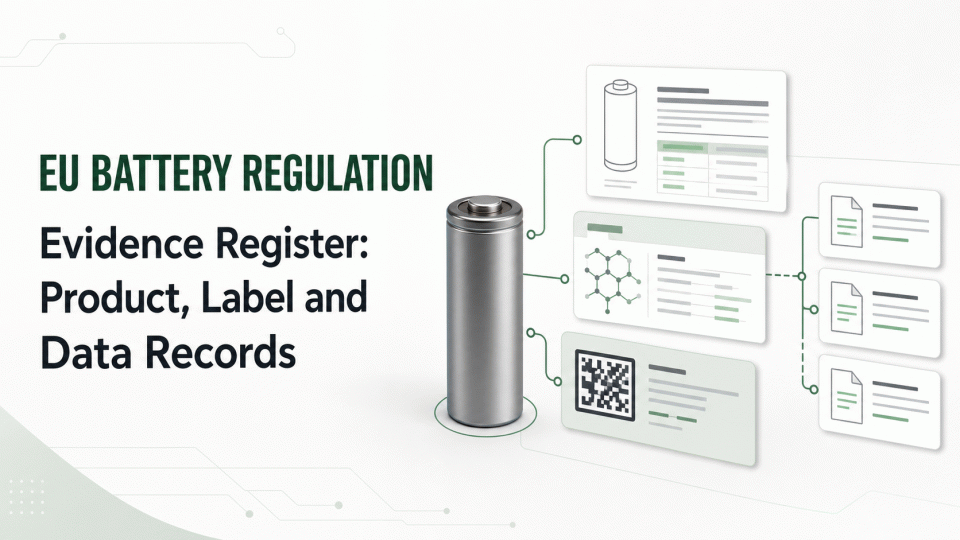
Regulation (EU) 2023/1542 establishes a framework covering batteries and waste batteries across placing on the market, use and end-of-life stages. A test report, supplier certificate or platform screenshot is not a complete conclusion. Start with the battery category, the economic operator roles and the target market, then map each requirement to the model, batch and supporting record. This reference is based on the current consolidated EUR-Lex text and European Commission materials; the applicable version, annexes and implementing documents must be checked for each project.
1. Confirm the battery category and responsible parties
Build a model register and identify whether each item is a portable battery, starting, lighting and ignition battery, light means of transport battery, electric vehicle battery, industrial battery or another applicable category. Classification should not rely on the marketing name alone. Review the intended use, construction, rated characteristics and relationship with the equipment.
Identify the manufacturer, importer, distributor, authorised representative, producer-responsibility organisation and other relevant supply-chain parties. Record the legal name, registration details, countries of placing on the market, authorisations and covered models. A supplier document is relevant only when its entity, product and responsibility chain actually match the battery being assessed.
2. Technical documentation: connect the model, components and safety evidence
For each model, organise specifications, rated capacity and energy, chemistry, key materials, BOM or component list, drawings, use and installation instructions, warnings, transport-related records, risk analysis, and applicable test or assessment records. Mark every file with its version, date, covered model and owner.
Do not substitute a report for another model in the same family, or mix cell, module and battery-pack evidence without documenting the relationship. A design revision, material change, supplier change or critical-component change should trigger a documented impact review and a decision on which evidence must be refreshed.
3. Conformity, markings and customer-facing wording
Depending on the battery category and applicable provisions, organise the conformity-assessment route, declaration of conformity, technical documentation, manufacturer and importer information, and traceability records. The model, capacity, warnings, recycling information and responsible party should be consistent across the battery, packaging, instructions and online page. Where a CE mark or other mandatory information applies, use the relevant provisions and the actual assessment record as the basis.
A label, QR code or other data carrier does not replace the technical file. Page wording should not turn a statement about one requirement into a claim that the product is accepted in every market or has passed a platform review. Keep page versions, translations, artwork and approval records so they can be reconciled after a model or regulatory change.
4. Carbon footprint, performance and battery-passport data
The Regulation introduces carbon-footprint, performance and durability requirements for relevant battery categories, with scope and implementation depending on the applicable provisions, annexes and supporting technical documents. A carbon-footprint file should identify the battery model, functional unit, life-cycle boundary, production sites and batches, activity data, emission factors, calculation method, version, owner and any independent verification or assessment record. One promotional number should not be used for every model or factory.
For applicable industrial, light means of transport and electric vehicle batteries, the Regulation also provides for electronic records or battery-passport-related information. Prepare a field map linking the unique identifier, manufacturer, model, key materials, performance, carbon footprint, supply-chain origin, repair or dismantling information, and recycling and recycled-content data. Confirm the applicable category, threshold, access rights and submission format against the current Regulation and related documents.
5. Due diligence, producer responsibility and maintenance
Where battery due diligence, producer responsibility, collection, recycling, recycled-content or supply-chain information requirements apply, keep the supplier list, raw-material origin, purchase and batch records, due-diligence policy, risk assessment, corrective actions, producer registration or responsibility records, and documents with collection or recycling organisations. If an origin or control cannot be verified, do not present it on the page as a completed regulatory conclusion.
Use one evidence register per model: provision or annex, responsible party, SKU and batch, evidence file, version, source, applicability, gap, reviewer and proposed page wording. Re-run the impact review after a material change, redesign, factory or supplier change, market change or regulatory update. 绿色方舟(深圳)认证有限公司 can help organise evidence boundaries and review logic, but this article does not promise certification, market access, platform approval or a regulatory outcome.
Sources: EUR-Lex, Regulation (EU) 2023/1542 on batteries and waste batteries, current consolidated text; European Commission Environment, Batteries Regulation materials. Regulations, annexes and technical documents can change; check the latest official version before use.