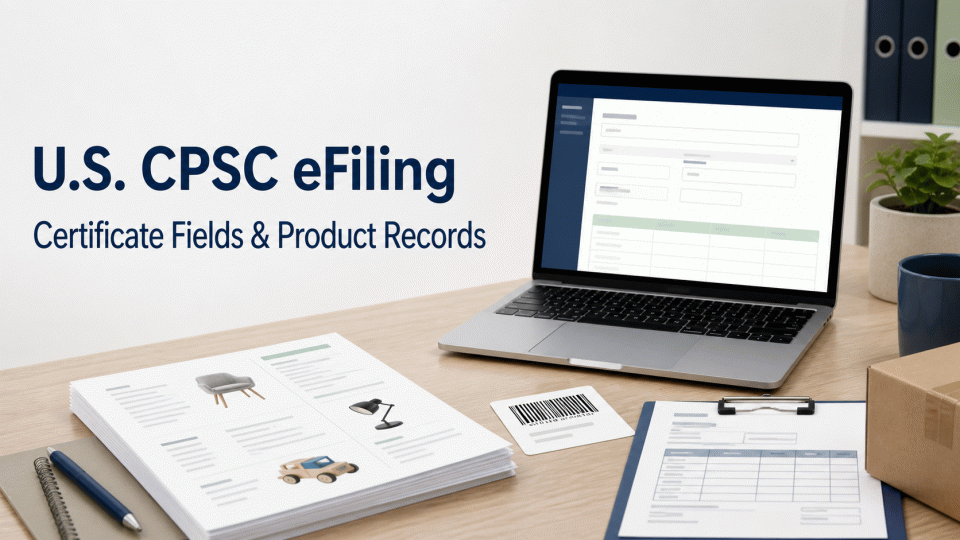
CPSC eFiling is an electronic process for certificate data associated with regulated imported consumer products. A practical preparation file starts by confirming whether the product is subject to a CPSC certification requirement, then linking product identity, responsible parties, applicable rules, testing support, certificate fields, and import records.
1. Confirm the Product and Responsible Party
For each product record, retain the brand, model or SKU, product description, manufacturer information, and identifying details from the packaging and label. For imports, confirm who is responsible for the certificate data. CPSC importer guidance commonly treats the Importer of Record (IOR) as the responsible party; in specific circumstances, an authorized customs broker may identify the owner, purchaser, or consignee that authorized the entry and is responsible for certification. Do not assume that the factory, brand owner, broker, and certifying party are the same entity.
2. Map Certificate Fields to Product Evidence
Build the field map around the applicable product rule rather than a generic certificate. Check product and model identification, the manufacturer or importer, the applicable CPSC rule or standard, testing support, laboratory and report reference, certificate information, and the manufacturing or import scope required for that certificate. A Children's Product Certificate and a General Certificate of Conformity serve different product contexts. Also distinguish testing that must use a CPSC-accepted third-party laboratory from testing for general-use products that may be performed by the manufacturer or importer under the applicable rule.
Test reports, specifications, bills of materials, labels, and instructions should point back to the same product identity. If the model, materials, construction, manufacturer, or applicable rule changes, reassess whether the existing record still covers the product. A supplier's verbal statement that a certificate exists is not a substitute for the source document and its scope.
3. Prepare Product Registry and Import Records
The CPSC Product Registry supports business accounts and management of product certificate data for import filing preparation. CPSC also describes the Product Registry as a stand-alone data repository that does not communicate directly with CBP's ACE system. Keep the certificate identifiers needed by the customs broker, the relevant shipment or entry association, HTS and other entry information, and verify that both systems point to the same product and certificate record.
A useful register links four records: the product, the certificate, the testing support, and the import entry. For each, record the source filename, version or report number, responsible party, scope, and human review conclusion. Mark missing fields as “to be confirmed” instead of filling them with assumptions.
4. Human Review Before Use
① Do the product name, model, images, packaging, and label describe the same item? ② Is the relationship between the certifying party and the importer supported by records? ③ Can each rule, test item, and report reference be traced to a source? ④ Does the certificate type match the product context? ⑤ Do Product Registry data and import records rely on the same product record? ⑥ Does the page state only what the documents support, without turning document preparation into a promise of approval, release, exemption, or platform action?
Source boundary: This reference is based on CPSC eFiling, Product Registry, importer resources, certificate updates, CPC/GCC guidance, and general-use product testing guidance. Product category, applicable rule, and import scenario can change the required fields; check the applicable rule and current CPSC guidance before use.