
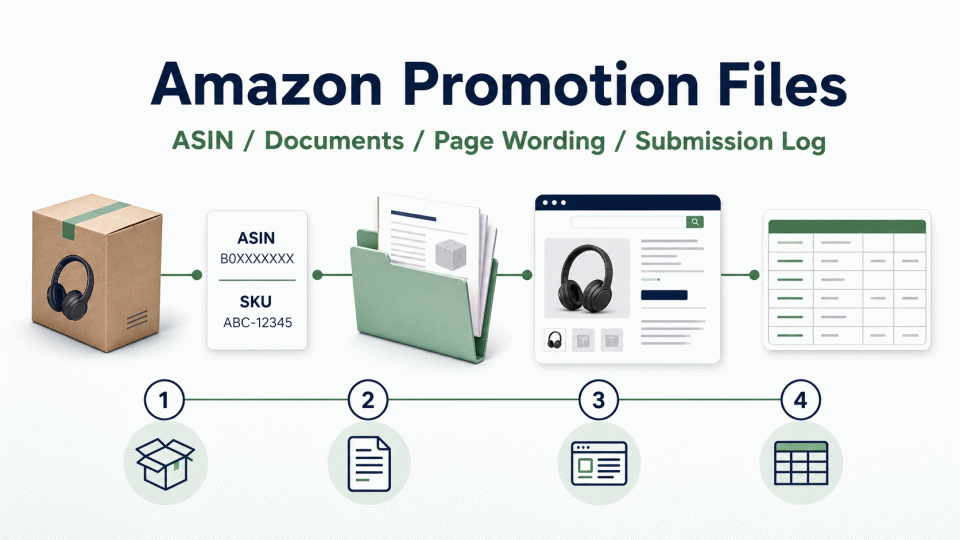
Peak-season preparation is not a matter of placing a generic certificate in a folder. It is a traceable link between each ASIN or SKU, the product version, supporting files, customer-facing wording, and the submission record. Amazon requirements vary by marketplace, category, account role, and the specific request shown in Seller Central. This page is an organizing framework, not a substitute for an individual request.
1. Define the product and the use case
Start with an ASIN/SKU register. Record the marketplace, product name, model or variation, brand owner, manufacturer, importer or responsible party, listing status, and the latest change. Do not file only by brand or factory: differences in formula, material, dimensions, plug type, packaging, or destination market can change the scope of supporting documents.
Separate the requirements into three tracks: legal or market-access requirements, Amazon requests for a particular product, and additional buyer or brand requirements. For each track, record the source, marketplace, responsible party, and open questions. This keeps a platform submission separate from a customs conclusion and keeps a voluntary claim separate from a statutory document.
2. Build four evidence folders
Entity and authorization: brand, manufacturer, importer or responsible-party details, plus relevant authorization records. Names, addresses, and roles should match the ASIN record.
Product and technical files: specifications, BOMs, formulas or critical components, label and manual versions, packaging artwork, warnings, and destination-market language. Mark each file with the models, variations, and versions it covers.
Testing and claims: retain complete reports, issuing organization, report number, sample information, test items, issue date, and the applicable standard. Do not rely on a summary page or extend a document to products it does not cover.
Supply chain and submission: where relevant, retain purchase, batch, transport, raw-material, or environmental-claim support, together with filenames, submission dates, notices, supplements, and correspondence. Unrelated materials should not be placed in the same evidence package.
3. Match page wording to evidence
Review the title, bullets, detail page, image text, and variation relationships line by line. Product attributes, materials, specifications, and environmental statements should map back to evidence for the same version. For terms such as “green,” “sustainable,” or “recyclable,” identify the object, scope, and conditions; do not turn a supply-chain attribute into an unconditional statement about the whole product.
When Amazon raises a request in Account Health or Product Compliance Requests, use the ASIN, document type, format, and due information shown there, and retain the notice or case reference in the submission log. Do not promise approval, continued availability, or a fixed review time in customer-facing material.
4. Human pre-submission review
Before submission, confirm that the ASIN/SKU and model match; entity names, addresses, and roles match; reports are complete and have identifiable numbers; labels, manuals, and page versions correspond; files open clearly without missing pages; environmental or certification wording identifies its object, scope, and source; marketplace and document type match the notice; and supplements and version changes are logged.
During maintenance, revisit the relevant records when the product, supplier, factory, material, packaging, marketplace, page claim, or Amazon request changes. Keep superseded versions and the reason for each change. 绿色方舟(深圳)认证有限公司 can help organize evidence and wording relationships; the relevant entity remains responsible for confirming platform decisions, market-access duties, and product responsibilities.
Source and boundary note
Amazon’s Seller Central product-compliance tool can help locate the relevant entry point and product-specific request: Product Compliance Reference Tool. Amazon also notes that applicable laws and obligations depend on the product and destination. This page does not replace a platform notice, the original regulation, laboratory judgment, or legal advice.


