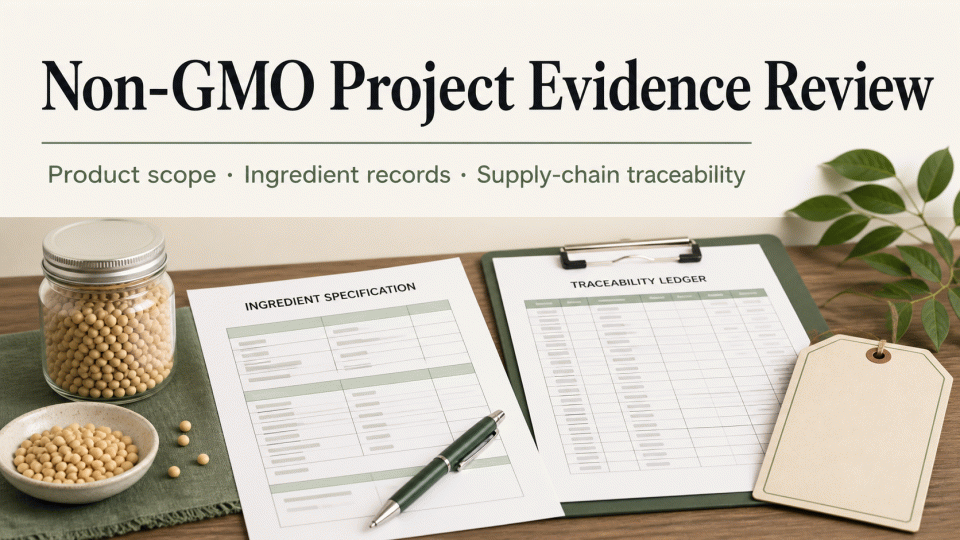
The Non-GMO Project Product Verification Program (PVP) evaluates products against the public Non-GMO Project Standard and related program documents. Independent Technical Administrators (TAs) conduct the evaluation. This page is a preparation reference; it does not indicate that any particular product has been verified.
1. Define the product and the program boundary
The program evaluates an enrolled product, input, or ingredient against applicable requirements. It is not a universal certificate that automatically covers every SKU. Start with a product register: brand, product name, formulation version, pack format, selling form, key ingredients, and manufacturing sites. Recheck the scope when a formulation, source, process, supplier, or site changes.
“Non-GMO Project Verified” is a program status used after the applicable Standard and program requirements have been met. It is separate from organic certification, mandatory market labelling, platform review, and private buyer requirements. Food labelling, import, and advertising rules in each target market still require separate review.
2. Build evidence around ingredient risk and processing
Create one record for each ingredient: name, supplier and site, function in the formulation, source or risk classification, any existing Non-GMO Project status, lot or transaction records, related statements, and document version. A generic supplier statement should not be treated as a conclusion for the enrolled product; reconcile the legal entity, ingredient identity, scope, and document relationships.
Depending on the product and its ingredients, a TA may request invoices, proofs of purchase, facility standard operating procedures, certificates of analysis, and other records. The official FAQ explains that testing is generally directed to meaningful ingredient or precursor points rather than applying one identical test to every finished product. Whether testing is needed and where it belongs is determined for the specific evaluation with the TA.
3. Connect supply-chain records to the product and label
Link purchasing, production, lot, storage, and transport records to the formulation version and finished SKU. Document how segregation and controls against commingling are applied. An evidence register should include the file name, responsible issuer, covered ingredient or process, related SKU or lot, version or date, storage location, open item, and reviewer.
Keep labels and marketing language aligned with the actual program status and permitted use rules. Do not claim that a product is verified or approved before the applicable evaluation is complete, and do not use a program mark as a substitute for local legal requirements. If the mark will be used, review the official Trademark Use Guide and licensing arrangements.
4. A practical submission and maintenance checklist
1) Define the product and ingredient scope; 2) contact and select an independent TA; 3) submit entity, formulation, ingredient, processing, and traceability records requested by the TA; 4) track questions, supplements, and document versions; 5) use only permitted wording that matches the current status in labels, pages, and sales materials; 6) place changes and renewals into a maintenance calendar.
The official program rules state that every Verified Product undergoes an annual renewal evaluation administered by its TA. Fees, evidence depth, testing arrangements, and timing depend on the product and selected TA. Do not carry forward an old record without review after a formulation, ingredient, supplier, site, or label change.
Boundary note
This page is based on the Non-GMO Project’s public Standard, Program Rules and Procedures, Technical Administrators, Get Verified, and Verification FAQ pages. Program documents may change; the current documents and the TA’s product-specific evaluation control. 绿色方舟(深圳)认证有限公司 can help organize product–ingredient–evidence relationships but does not replace the Non-GMO Project or a TA’s verification decision.