
PEFC and FSC are different chain-of-custody (CoC) systems for forest- and tree-based materials. The practical choice should not be based on the name of a label alone. First confirm the scheme requested by the target customer or project, the certificates and transaction documents available from the supply chain, and whether the product group and proposed wording are covered.
1. What the two systems are designed to control
CoC controls how eligible material is identified and tracked through purchasing, receipt, processing, storage, sale and delivery. FSC describes identification and tracking of FSC material and the use of FSC claims on sales documents. PEFC’s CoC framework likewise sets requirements for material control and claims. Neither system is a product-safety test, and neither automatically demonstrates compliance with every law in a destination market.
2. Keep the claims separate
FSC: common on-product labels include FSC 100%, FSC Mix and FSC Recycled. FSC 100% identifies products made with 100% virgin material from FSC-certified forests; FSC Mix combines FSC virgin fibre and/or recycled material with controlled virgin fibre; FSC Recycled identifies products made with 100% recycled fibre. The applicable claim still has to match the supplier document, product group and standard.
PEFC: PEFC’s published claim guidance includes X% PEFC certified, PEFC controlled sources and 100% PEFC Origin claims, with requirements for sales documents and language use. PEFC certification may rely on a PEFC-endorsed national or regional scheme, so review the certificate basis, scope and trademark permission rather than relying on a generic statement that a supplier is “PEFC certified.”
FSC and PEFC claims, labels, scope records and trademark rules are not interchangeable. If a product carries both types of wording, map each statement to its own material, supplier, certificate and transaction record.
3. Choose a verification path for the commercial scenario
When the buyer specifies a scheme: place that requirement in the SKU evidence file and request the relevant certificate number, certificate holder, sites, product categories or groups, validity status and claims shown on transaction documents.
When no scheme is specified: compare customer acceptance, current supplier coverage, material type, processing or outsourced steps, batch control and the ability to issue matching sales-document claims. The more workable choice is the one for which the supply chain can consistently produce traceable evidence.
A retailer promoting a finished product may have a different role from a manufacturer or trader making CoC claims. Promotional licensing, a manufacturer’s CoC certificate and a product claim should not be treated as the same thing.
4. Build one evidence map per SKU
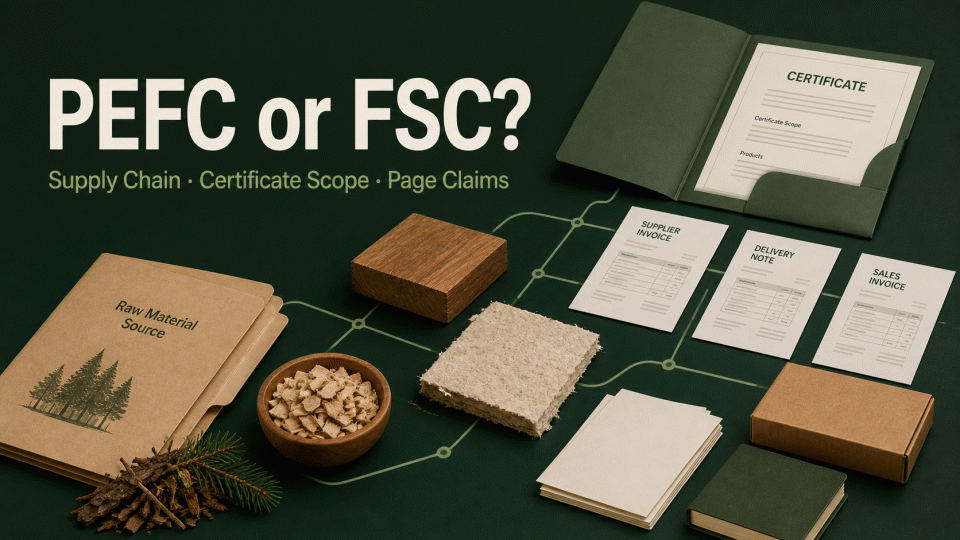
Use six linked fields: product, material, supplier, certificate, transaction document and page wording. Record the SKU and its paper, wood or bamboo components; identify suppliers and processing sites; retain the FSC or PEFC certificate and scope; reconcile the claim on purchase, delivery or sales records; then check that the product page, packaging and advertising stay within the verified material scope.
Wording such as “FSC certified,” “PEFC certified” or “from responsible sources” should not be expanded into a product-wide safety conclusion, a claim that every component is covered, or a guarantee of legal compliance. Trademark, label and promotional use must follow the applicable scheme rules and permission or approval process.
5. Boundary: CoC is not the same as EUDR or market access
PEFC’s EUDR due-diligence module is a separate voluntary module, and PEFC states that responsibility for EUDR compliance remains with the relevant organisation. FSC or PEFC CoC does not automatically replace destination-market rules on timber, packaging, customs, product safety or environmental claims. Reconfirm the scope when the material, role, destination or applicable document version changes.
6. Pre-submission checklist
① Is a scheme named by the buyer or project? ② Do the certificate holder, sites and product scope cover this SKU? ③ Can each material claim be reconciled to purchase or sales documents? ④ Are processing, outsourcing, mixing and storage steps covered by the applicable procedure? ⑤ Does page wording stay within the verified material scope? ⑥ Is the label or trademark use licensed or approved? ⑦ Have other destination-market requirements been checked separately?
This reference is based on public FSC and PEFC materials and is a starting point for evidence mapping. 绿色方舟(深圳)认证有限公司 does not present it as a substitute for a certification body, buyer or destination authority’s assessment of a specific product and file set.


