For: Cross-border product, sourcing, quality and compliance teams.
PFAS cannot be reduced to one global “ban.” Market, product use, substance scope, restriction mechanism, analytical method and documentary duties may differ. This reference framework helps a team identify the applicable scope first, then connect product composition, supplier statements, test records and page wording. It is not a universal compliance conclusion or a substitute for a target-market legal review.
1. Start with four scope questions
- What is covered? Identify whether the rule concerns a substance, mixture, material, finished article, textile, food-contact material or packaging component.
- What is the legal status? Separate effective law from proposals, consultations, guidance and voluntary buyer requirements. The EU universal PFAS restriction remains an ongoing REACH process; use ECHA’s latest material and the final legal text.
- What conduct is restricted? A measure may address manufacture, import, placing on the market, use, a specific application or information reporting. A non-detect result does not automatically establish compliance in every market.
- What will the page claim? Page wording should stay within the documented product, material, batch, use and test scope. “No intentionally added PFAS” should not be turned into an absolute claim about every PFAS.
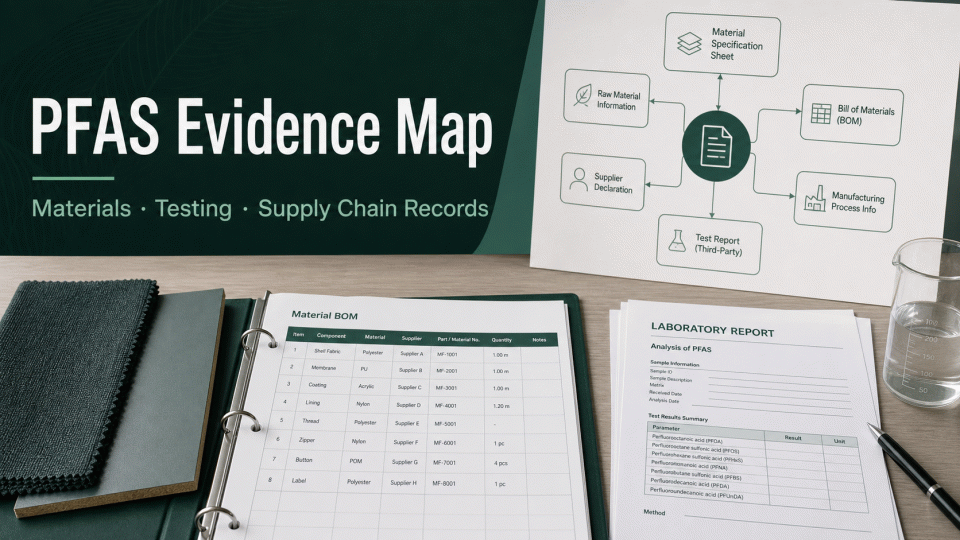
2. Suggested evidence map for each SKU
| Record | Manual review | Boundary |
|---|---|---|
| Product and BOM | SKU, model, colour, components, coatings, adhesives, inks, packaging, version and production batch. | A BOM is not a test conclusion; reassess after a material or process change. |
| Supplier records | Legal entity, material code, batch, intentional-addition statement, scope, signatory and date. | A supplier statement does not replace a market-specific test or statutory document. |
| SDS and chemical records | Version, revision date, use, composition disclosure and fit with the actual process. | An SDS describes chemical hazard and safety information; it is not a finished-article PFAS test report. |
| Test report | Sample description, sampling date, method, analyte list, LOQ, units, laboratory competence and report number. | Choose method and panel with the target rule, product category and laboratory; do not invent a universal validity period or analyte count. |
| Production and batch trail | Purchase, intake, BOM version, process change, production batch and shipment links. | Traceability supports review; it does not by itself establish a regulatory result. |
| Page claim draft | Map every “no intentionally added,” “free from” or “meets” statement to a SKU, scope, version and source. | Avoid “PFAS-free forever,” “globally compliant,” “absolutely safe” or “guaranteed” language. |
3. How to use official sources
- ECHA PFAS topic page: track the REACH restriction proposal, process status and supporting documents. A proposal is not an effective universal ban.
- US EPA TSCA Section 8(a)(7): check reporting and recordkeeping scope, look-back period and information fields. It is not a blanket prohibition on every imported article.
- California HSC 108971 (AB 1817): check the textile-article coverage and manufacturer certificate requirement; do not extend it to every product.
- Canada PFAS topic page: distinguish risk-management work, proposed measures and published regulations.
4. Five manual checks before publishing
- Lock the market, product category, use and legal version.
- Match the BOM, sample description, test report and batch trail.
- Label effective law, proposal and buyer requirement separately; remove countdowns and fixed deadlines.
- Read every page claim against its documented SKU, material and test scope.
- Have product, quality and compliance owners review together; hold any sentence that lacks evidence.
Boundary note: This is a documentation framework, not a product or market compliance conclusion. 绿色方舟(深圳)认证有限公司 does not use this page to promise certification, customs clearance, listing or regulatory outcomes.