
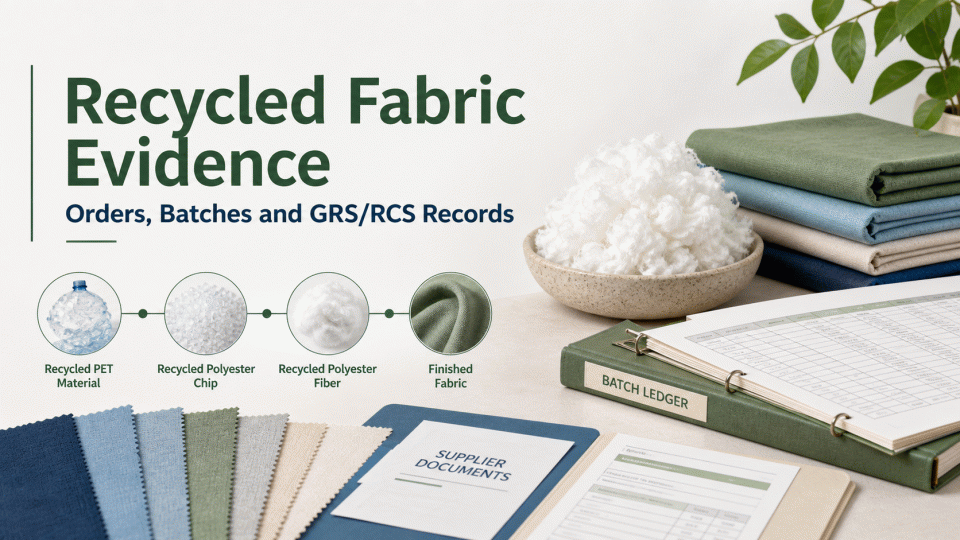
When a buyer asks for recycled fabric, do not treat the request as a certificate name alone. First clarify whether the buyer needs a traceable recycled-material claim or a product standard that also covers social, environmental and chemical requirements at processing sites. Then connect the exact fabric, supply-chain stages and proposed wording.
1. Separate GRS, RCS and the buyer’s requirement
RCS is primarily used to verify and trace recycled input and chain of custody. GRS covers recycled content and chain of custody, with additional social, environmental and chemical requirements for relevant processing. Neither standard automatically means that a product meets every textile law, platform rule or private buyer standard.
For the order brief, separate the buyer’s requested standard, mandatory market requirements and voluntary sustainability wording. If the request is simply “a recycled fabric certificate,” confirm the fibre composition, intended product, sales market, claim location, supplier role and whether a final-product label is required.
2. Map certificate scope to the fabric and each site
Build a mapping table for order, fabric specification, production site and certificate scope. Record the fibre or yarn source, recycled input type, composition or blend information, colour and processing, production batch, quantity unit and finished use. Do not replace certificate details or transaction records with a supplier’s general description.
Check the Scope Certificate holder, sites, process categories, product scope and current status. Confirm that every mill or processing site involved in the order is covered. If spinning, weaving, dyeing, finishing or garment production changes, re-check the chain of custody rather than assuming the certificate follows the fabric name.
3. Connect inputs, processing and outputs through batch records
A batch ledger should trace back to purchase orders, invoices or delivery records and connect with raw-material lots, production lots, inventory and dispatch records. For each lot, record input material, quantity, any documented conversion or loss, output product, date and responsible stage. Keep measurement units consistent and do not merge different lots or material attributes into an unsupported summary.
Where a Transaction Certificate or other transaction document is used, compare the parties, product description, quantity, lot, standard name and linked order. Any recycled-content or label wording should lead back to the applicable standard documents, certificate scope and traceability records. If the evidence is incomplete, describe only verified material facts instead of presenting an assumption as a certification conclusion.
4. Evidence file before delivery
Use four folders: order and product specifications; supplier and processing-site information; Scope Certificates, Transaction Certificates and applicable claim documents; and batch, purchasing, production, inventory and dispatch records. Add version, source, linked lot and reviewer information to an index so the buyer receives evidence relevant to the order.
If the buyer requests hangtags, packaging or website copy, confirm the permitted standard name and labeling rules before drafting. Do not use Textile Exchange, GRS or RCS graphic marks without authorization, and do not turn “recycled fabric” into a blanket guarantee about every product, site, supply-chain stage or regulatory outcome.
5. Keep the page claim within the evidence
A page may explain that a particular fabric or batch uses recycled material supported by identified records, how chain-of-custody evidence is kept, and which certificate fields still need confirmation. It should not imply that certification covers sites, products, lots or markets outside the documented scope, or promise a particular label, purchasing qualification or review outcome.
绿色方舟(深圳)认证有限公司 can help organize the relationship between the order, certificate scope, transaction records and page wording. The applicable standard, certificate status and final claim remain subject to the relevant standard documents, certification-body records and buyer requirements.


