
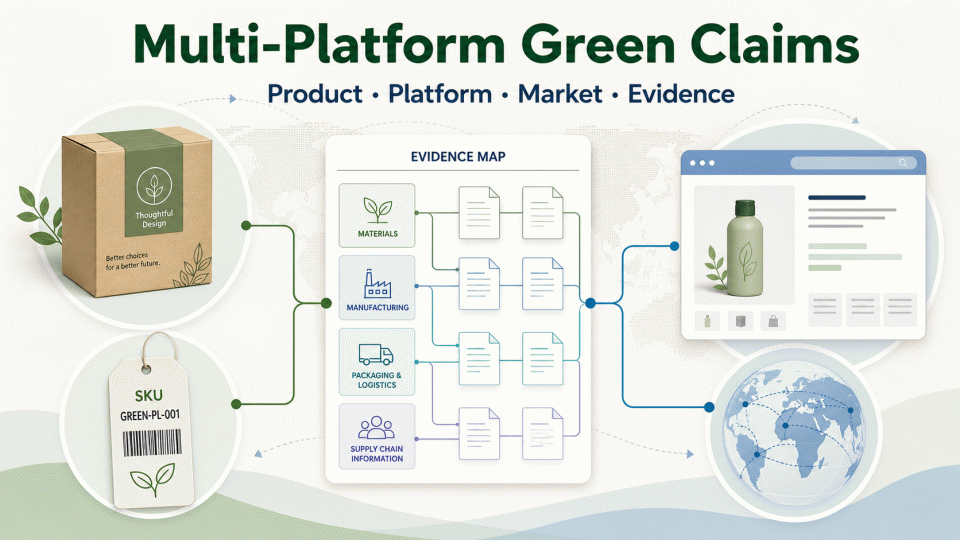
Amazon Climate Pledge Friendly (CPF), product pages on channels such as TikTok Shop, and a seller’s own environmental marketing are different contexts. Start by defining the platform, market, product scope and claim object, then map each statement to supporting records. This page is a preparation reference; it does not represent platform inclusion, approval, certification or sales results.
1. Define the product, platform and claim scope
Create a product–platform–market–claim record covering SKU, model, formulation or material, packaging and label revision, brand and legal entity, destination market, sales channel, and the proposed certification name, environmental attribute or comparison. CPF is an Amazon programme context. Requirements and submission paths for TikTok Shop, SHEIN, Temu and other channels should be checked against each channel’s current seller portal or official rules, rather than treated as one universal green label.
When the same product is listed across several channels, record each product ID, page location, submitting entity, evidence requirement and current status separately. State whether the attribute applies to the product, package, component or a supply-chain stage; do not expand a partial record into an overall product conclusion.
2. Turn evidence into traceable records
Entity records explain the relationship among the brand owner, manufacturer, importer and authorised user. Product records cover specifications, BOM, materials or formulation, packaging, labels and image revisions. Certification or assessment records should identify the scheme, named holder, covered products, certificate or report number, permitted wording and scope. Supply-chain records may cover purchasing, batches, processing or origin where the specific scheme requires them. Each file should point back to a SKU, model, site, batch or page claim.
A supplier certificate does not automatically prove coverage of the branded product. Check the holder, product scope, site, revision, status and mark-use conditions. For contract manufacturing, brand authorisation or import arrangements, retain the responsibility map and authorisation chain. If the record does not support a statement, narrow it, qualify it or hold it for verification instead of filling the gap with a generic template.
3. Make the page say only what the evidence supports
An environmental claim should identify its attribute and scope, such as a material in the package, recycled content in the product, a defined production stage or a documented comparison. The U.S. Federal Trade Commission’s Green Guides caution that broad “green” or “eco-friendly” claims are difficult to substantiate, and that a certification or seal does not replace support for express and implied claims. Sources are listed below.
Do not present CPF or another marketplace programme as government endorsement, universal compliance evidence, or a guarantee of traffic, placement, conversion, inclusion or sales eligibility. Do not turn one material or packaging attribute into an overall environmental superiority claim. Comparative wording should identify the comparator, basis and evidence scope, and the title, bullets, detail copy and image text should be reviewed together.
4. Pre-submission checklist for multiple channels
Confirm: (1) platform and target market; (2) product ID, SKU, model and packaging revision; (3) submitting entity against certificates, reports or authorisations; (4) certification or assessment scope against the product and component being claimed; (5) document number, date, revision and status; (6) title, bullets, detail copy, image text and comparisons against the evidence; and (7) the channel’s current form, file, mark and authorisation requirements.
Log missing evidence as an open item and retain the submitted version, page capture and change record. Recheck the mapping after a material change such as a new material, factory, formulation, package, label, market or certification scheme. Greenark (Shenzhen) Certification Co., Ltd. should base a checklist on the specific scheme, client scope and current channel requirements rather than treating a generic list as a decision.
5. Sources and limits of use
Start with the U.S. Federal Trade Commission Green Guides for the substantiation boundaries around environmental marketing claims, certifications and seals. For Amazon CPF or another channel, verify current eligibility, records and submission instructions through the relevant official seller help, programme page or seller portal.
These sources provide a review direction; they do not replace market-specific legal advice, current marketplace rules, a certification body’s decision or a product-specific applicability assessment. Keep a page statement only when the corresponding records support it.


