
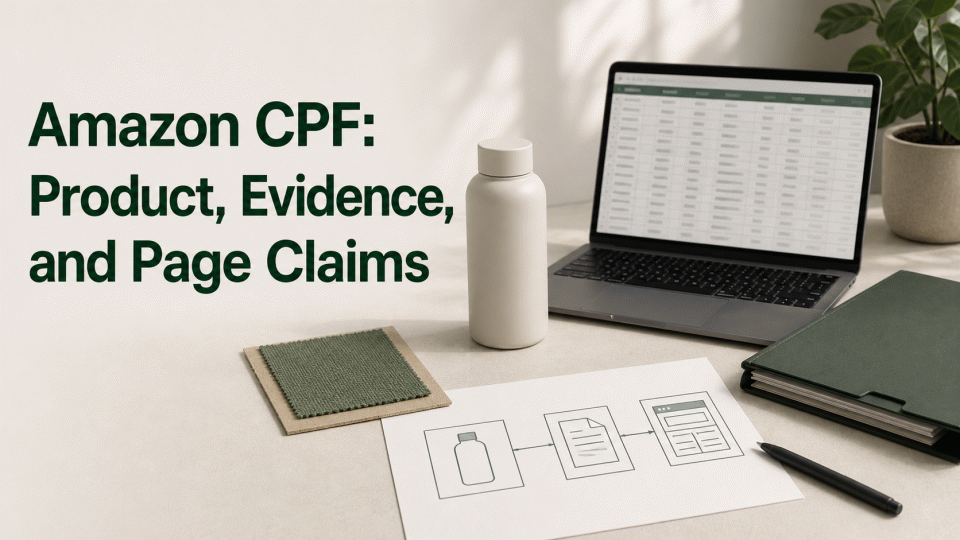
Amazon Climate Pledge Friendly (CPF) is an Amazon program entry point for products associated with sustainability standards or certifications. A sound evidence file starts with the current site requirements and then links the specific product, supporting documents, and page wording. CPF is not a universal certificate that replaces product law, testing, customs records, or a buyer’s separate requirements.
This is a documentation framework, not a promise that a product will qualify, be displayed, or be accepted. Program paths and submission requirements can change, so the current Seller Central and program pages should control.
1. Confirm the program path and product scope
Start from Amazon’s Sustainability Solutions Hub or the relevant Seller Central entry point. Record the marketplace, selling account, product identifiers, and the path being considered. Do not combine CPF, product or import law, buyer specifications, and third-party certification into one generic requirement: their responsible parties, evidence, and decision-makers may differ.
Create a product–version–market table with the ASIN, internal SKU, version, material or formulation, packaging version, target marketplace, and the specific attribute proposed for the page. A change to material, supplier, factory, packaging, or formulation does not automatically extend earlier evidence to the new version.
2. Check GRS, RCS, and OCS evidence as a chain
Textile Exchange standards use chain-of-custody controls to document material movement through the supply chain. A Scope Certificate (SC) shows that an organization is qualified for defined certified products or processes; a Transaction Certificate (TC) relates to a specific transaction or shipment. They serve different purposes, and an SC should not be treated as a substitute for a TC covering a particular shipment.
GRS and RCS address recycled-material claims and the relevant chain of custody; OCS addresses organically grown content and chain of custody. Check the certified entity, scope, facilities or processes, product description, material type, quantity or content statement, shipment or transaction details, dates, and issuing body. Use Textile Exchange’s company and transaction-certificate authentication resources where applicable.
If the evidence covers only one component, the page claim should identify that component or material. It should not become a claim about the whole product, package, or brand. If chain of custody to the brand is incomplete, or the current program does not accept the proposed evidence route, pause the claim and confirm the path with the certification body or Amazon’s current program entry point.
3. Build a product–document–claim matrix
Column one records product facts: ASIN, SKU, version, material or component, packaging, and marketplace. Column two records evidence: SC, TC, supplier or input records, specifications, BOM, testing files, purchase records, and shipment documents. Column three contains only the page wording actually under consideration, such as “the outer fabric contains a specified recycled material,” with the document, product part, and market that support it.
For every row, ask whether the legal entity matches the responsible party, whether product name, model, material, and quantity match, whether the document can be authenticated, and whether the wording stays within the document’s scope. Do not replace an unverified field with phrases such as “usually accepted,” “platform approved,” or “passed.”
4. Review environmental wording separately
For U.S. marketing, the FTC Green Guides are a useful reference point: broad, unqualified “green” or “eco-friendly” language can imply wide environmental benefits, while recycled-content, certification, and percentage claims should identify the attribute and be supported by competent and reliable evidence. Other markets require their own advertising, consumer-protection, and platform review.
Remove expansive wording such as “zero pollution,” “fully green,” “officially certified,” or “guaranteed enrollment.” Distinguish “contains verified recycled material” from a claim that the whole product is better for the environment. Use a certification mark, program name, or brand authorization only after confirming the applicable use conditions; do not redraw or improvise an official mark.
5. Human review before submission
Read the current Amazon entry point, certificates, and transaction records line by line. Confirm the marketplace, account, ASIN/SKU, version, material, responsible entity, and page claim. List missing evidence instead of substituting a universal “24-month” rule or a fixed lead time. Save the submission version, source pages, and review date. Reassess the claim after product, supply-chain, certificate-scope, or page changes.
Where 绿色方舟(深圳)认证有限公司 assists with document organization, the review should remain based on verifiable product and supply-chain records and should distinguish the program path, certification scope, and page wording. Document review is not an Amazon decision, a legal conclusion, or a certification result.
Sources: Amazon Sustainability Solutions Hub; Textile Exchange: Scope and Transaction Certificates; Textile Exchange: Certificate Authentication; FTC Green Guides summary.


