
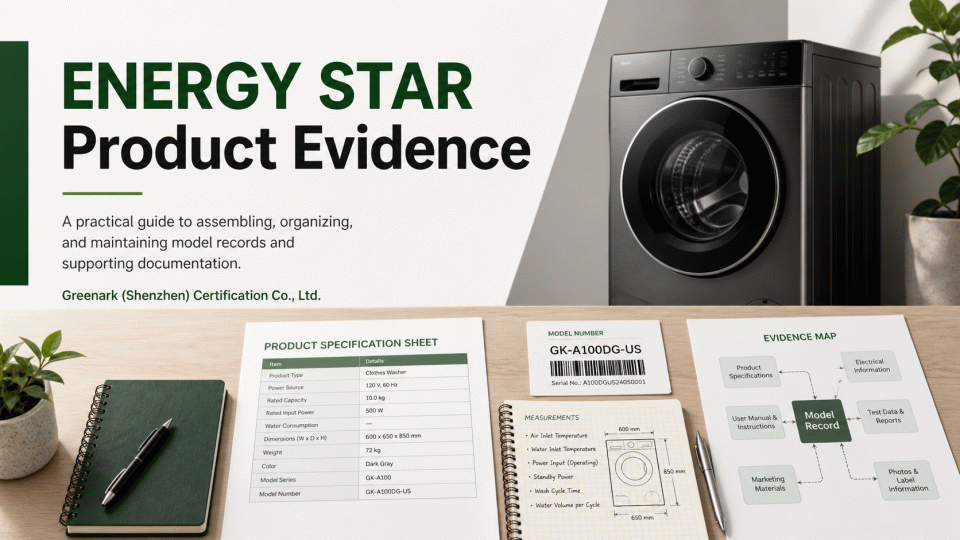
ENERGY STAR is not a decorative label that can be separated from a product model. The program uses product categories, specification versions, testing, and third-party certification arrangements. Any related statement on a product page should be limited to what the identified model and supporting records actually establish.
1. Separate ENERGY STAR from other obligations
ENERGY STAR eligibility, mandatory U.S. energy labels, market or import requirements, and marketplace or buyer document requests may appear in the same project, but they are not one evidence system. ENERGY STAR focuses on the applicable product specification and certification arrangement. EnergyGuide labeling is a separate rule set, and requirements in another country or region must be checked against that market's own sources.
Do not use an ENERGY STAR record as a substitute for another legal document. Do not turn a product-level efficiency record into an unqualified claim that the entire product is “green” or better for the environment. A working evidence table should identify the product category, market, responsible entity, model/configuration, applicable rule, and evidence status.
2. Build the record around the model and specification version
First lock the product identity: brand, complete model number, series, rated electrical characteristics, key functions, sales configuration, and target market. If a series includes different capacities, controls, software versions, or power configurations, do not assume that a series name alone proves the same evidence applies.
Next consult the official ENERGY STAR product specifications and partner resources. Record the applicable category, specification version, status, and effective information. The official search record, product page, or retained partner document should point back to the internal model register. When a model, brand owner, or configuration changes, reassess the scope instead of relying on an old screenshot or a supplier's general statement.
Keep the test conditions and measured data in the evidence chain. The report, laboratory, sample configuration, software or firmware version, date, and key parameters should all point to the specific model. There is no universal report-age or renewal period in this article; an update decision depends on the applicable specification, certification-body requirements, product changes, and the target-market rules.
3. Map page claims to the supporting record
A statement such as “meets a specification,” “listed in a program record,” or “has this measured energy-use value under these test conditions” should map to the product record, specification version, test data, or official database entry. Do not turn an application, pending review, or a supplier's similar report into a claim about the finished product.
For “green,” “eco-friendly,” or other environmental wording, use the FTC Green Guides as a boundary reference. Claims should be truthful and supported by competent evidence, with clear and specific qualifications where needed. A broad claim of overall environmental benefit does not follow automatically from one model record. If the evidence covers only energy use under stated conditions, limit the claim to that attribute and those conditions.
If a page uses a certification name, seal, or program mark, verify the name, mark, and permitted use first. Do not redraw an official logo, and do not present a third-party program owner, certification body, or marketplace decision as a certification result of Greenark (Shenzhen) Certification Co., Ltd. The company may organize records and review claim boundaries; the authoritative status remains with the relevant program or official source.
4. Records worth retaining
Product identity: brand and responsible entity, complete model and configuration, rated characteristics, photographs, manual, and label artwork.
Specification basis: product category, specification version, effective information, official search record, partner or certification-body material, and change notes.
Testing and data: method, sample configuration, measured values, laboratory or certification body, report number, issue date, and deviations or limitations.
Page mapping: the exact product or environmental claim, model covered, supporting file, qualifier, reviewer, and change date.
5. Manual review before submission or update
Check the model, configuration, units, and test conditions line by line. Make sure the English page contains no Chinese title or internal template residue. Confirm that product images, labels, and page claims do not use an unauthorized official logo or result-style visual. Every conclusion should have a locatable source or original record. Reassess when the product, key components, software, supplier, or target market changes.
ENERGY STAR material is most useful as a traceable product record, not as a slogan detached from the model and conditions. This preserves verifiable program facts while keeping program eligibility, legal duties, and marketing conclusions distinct.


