
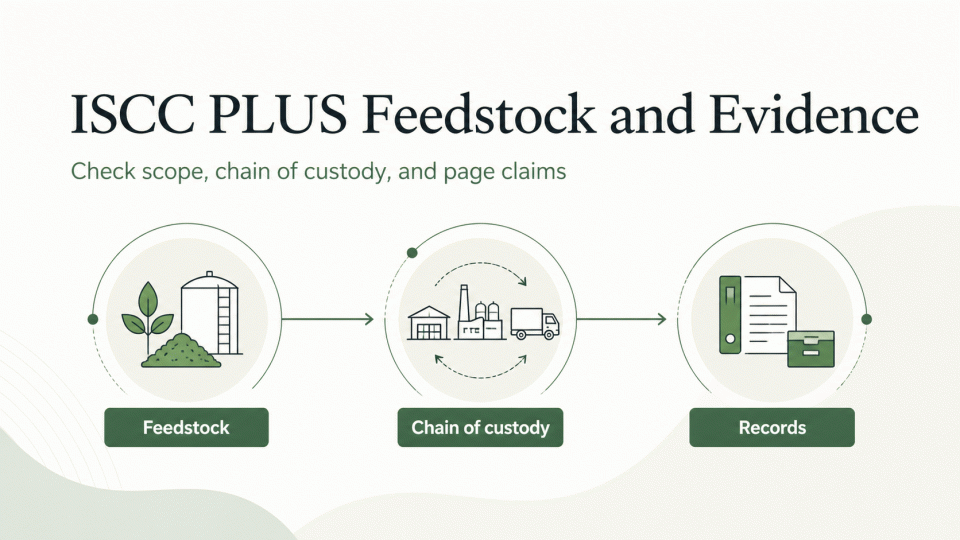
ISCC PLUS is a voluntary certification system for tracking alternative materials through supply chains. This reference uses ISCC System’s public materials on ISCC PLUS certification, traceability and chain of custody, mass balance, and logos and claims. The current version, certified scope, certification body, and wording for a specific project must be checked against the applicable documents. This article does not promise certification, platform eligibility, market access, or any commercial result.
1. Define the object and certified scope first
ISCC PLUS is not a standalone “green product” label detached from the supply chain. The review should identify the feedstock, its source category, the organization and site receiving it, the processing steps, and the products or intermediates produced. Record the material flow before drafting a page claim.
A product, feedstock, legal entity, certified site, and page claim are different objects. A supplier’s certificate does not automatically cover the current company, site, SKU, or batch. A page statement such as “sustainable” or “bio-based” cannot replace a review of the certified scope and transaction records.
2. Keep the three chain-of-custody options distinct
Physical segregation. Materials with different sustainability characteristics remain physically separate through the relevant supply chain. Records should explain the connection between inputs, storage, processing, and outputs.
Controlled blending. Different materials may be blended under the applicable rules, but inputs, conversion, outputs, and relevant characteristics still need to be documented. “Blended” does not mean that every output has the same feedstock attribute.
Mass balance. Certified and non-certified materials may be physically mixed during storage, transport, or processing, while the certified attributes are kept separate through verifiable bookkeeping. The certified quantity attributed to outputs cannot exceed the available certified input within the relevant system boundary and period, taking applicable losses and conversion records into account. A mass-balance claim must not imply that every physical part of the finished product contains the claimed feedstock.
ISCC PLUS 203-2 sets detailed requirements for chain-of-custody options and mass-balance records. The rolling-average percentage method, credit method, and applicable periods must be handled according to the current document. Requirements for one method should not be copied into another.
3. Build an evidence register from feedstock to claim
Feedstock: record the material name, category, supplier, sustainability characteristic, quantity, delivery date, and documents supporting the characteristic. Where waste or residues are involved, check the applicable ISCC definitions and origin evidence.
Process: record the certified entity, site, activities, inputs and outputs, conversion or losses, storage or batch boundary, relevant period, and the chain-of-custody option used. A process map should explain how material and sustainability characteristics enter, move, and are allocated.
Output: connect product name, specification, SKU or batch, output quantity, sales documents, and proposed claim in one record. For mass balance, retain more than a headline percentage: keep the input, allocation, and balance movements that make the claim auditable.
Claim: review whether each sentence concerns feedstock origin, chain of custody, certified scope, or a broader environmental attribute. Wording should stay within the evidence. ISCC PLUS certification should not be expanded into “zero carbon,” “zero risk,” “fully compliant,” or another outcome claim without separate support.
4. Cross-check certificates and transaction records
Check the certificate holder, certified site, activities or product scope, status, dates, and certificate number. Then compare transaction or delivery records for the parties, product description, quantity, dates, and upstream/downstream connection. A certificate supports only its stated scope; it does not automatically cover an unlisted entity, site, product, or period.
Before using the ISCC name, logo, or a specific claim on a page, review the current ISCC Logos and Claims document and any authorization requirements. “ISCC PLUS” should not be presented as a government mark, product-safety approval, or platform-review result.
5. Six checks before publishing
First, identify whether the claim concerns feedstock, material, product, company, or supply chain. Then check: the covered entity, site, activity, and product; the consistency between the chain-of-custody method and the wording; the links between quantities, periods, batches, and balance records; whether mass balance has been incorrectly written as physical content; and whether names, percentages, environmental terms, marks, and authorizations match the evidence.
Sources: ISCC PLUS Certification, ISCC PLUS 203-1 Traceability, ISCC PLUS 203-2 Chain of Custody, the Mass Balance Guidance Document, and ISCC 208 Logos and Claims. Standards and system requirements can change; check the ISCC System document library for the current version before use. Prepared by Greenark (Shenzhen) Certification Co., Ltd.; this reference is not a guarantee of a project outcome.


