
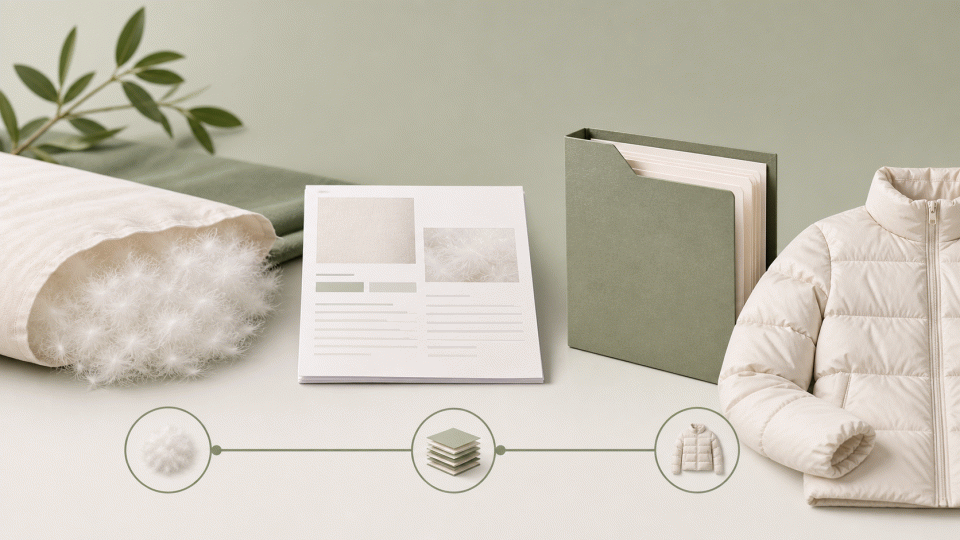
The Responsible Down Standard (RDS) is not a warmth-performance test or a certificate that can be copied across products. A sound product file connects the origin of down and feathers, animal-welfare requirements, chain-of-custody records and the exact product claim shown to customers.
1. Define what RDS covers
Textile Exchange describes RDS as a voluntary standard concerned with the welfare of ducks and geese used for down, while its chain-of-custody system helps track certified material through the supply chain. The standard includes requirements such as prohibiting live-plucking and force-feeding, and relevant supply-chain stages are audited by professional third-party certification bodies.
RDS therefore does not establish warmth performance, product safety, import eligibility or a marketplace outcome. A down jacket, sleeping bag or duvet still needs a separate review of the product, textile, chemical, labeling, safety and marketplace requirements applicable to its destination and use.
2. Map the file from product to claim
Product: list the SKU, style, color, filled component and down/feather composition. If only one component is covered, the page should identify that component rather than imply that the entire product has the same status.
Material: retain specifications, composition information and purchasing records. Check the certified entity, scope, transaction and actual material flow. A supplier saying that it “has a certificate” does not by itself support a claim for the current SKU or transaction.
Chain of custody: RDS uses chain-of-custody requirements to track certified material from its source through the supply chain to the final product. Build one evidence index linking the Scope Certificate, Transaction Certificate where applicable, purchasing and sales documents, processing sites and the product BOM. Record the entity, material, quantity, date and transaction covered by each file. If the links do not reconcile, do not publish the product claim yet.
Page wording: break each RDS statement into fact, evidence, responsible entity and product scope. RDS names, logos, hangtags and product-related claims must follow the current claims policy and logo specifications and be reviewed through the relevant certification body. Do not turn a supplier marketing sentence into a certification conclusion.
3. Keep the claim boundary clear
Possible wording, when supported by the current file, can state that a product uses RDS-related down or feather material, that its certificates and transaction records are being checked against a specific SKU, or that RDS addresses waterfowl welfare and chain of custody. The wording must match the certificate holder, product scope and evidence.
Avoid saying that RDS proves a product is warmer, safer or automatically more sustainable, or that it guarantees customs clearance, marketplace approval or certification. Do not present RDS as a universal compliance document for every raw material, package or product requirement. It does not replace separate reviews of destination-market labeling, product safety, chemicals or import documentation.
4. Pre-publication review
For each SKU, check: (1) product and filled-component scope; (2) certificate holder and certification body; (3) the link between the Scope Certificate and Transaction Certificate where applicable; (4) the relationship among supplier, processor, brand and seller; (5) whether the page claim covers only what the evidence supports; and (6) whether the logo, hangtag and claim wording have been reviewed under the current requirements.
This article is a file-and-wording review framework. Whether a particular product can carry an RDS claim depends on the current standard documents, valid certificates, transaction records, certification-body review and destination-market requirements. 绿色方舟(深圳)认证有限公司 can help map product files, certificates, supply-chain records and page wording, but it does not replace the standard owner or certification body’s certification decision.
Sources
Textile Exchange: Responsible Down Standard; Textile Exchange: What is the Responsible Down Standard?; RDS-101 Responsible Down Standard; Textile Exchange: Standards Claims Policy. Check the latest versions before use.


