
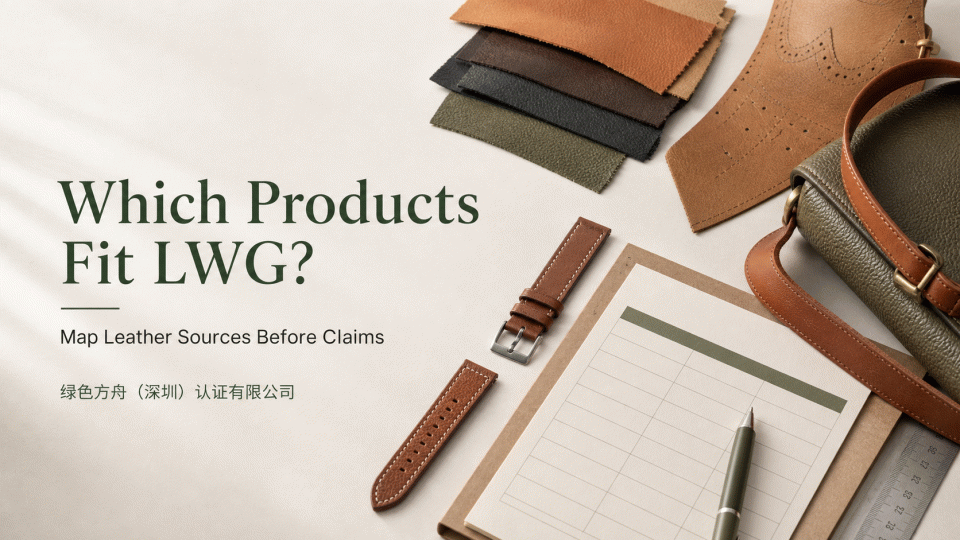
LWG is not a universal green label for finished goods. Its audit framework focuses on relevant facilities and actors in the leather supply chain. For shoes, bags, watch straps and other leather goods, start by identifying the leather facility, processing stage, material batch and finished SKU before using any LWG-related wording.
1. Confirm that the product actually uses leather
A shoe upper, lining, tongue, strap or trim may come from different suppliers. The same applies to a bag body, handle, shoulder strap, wallet, watch strap, belt, furniture panel or vehicle interior. Synthetic leather, coated fabric, textiles and metal fittings should not be placed in the LWG leather scope simply because the product is marketed as a leather good.
Build a material register for each SKU: product model, leather component, material description, supplier, processing stage, batch or purchase reference, and non-leather components. This determines whether the relevant record belongs to a leather manufacturer, trader, commissioning manufacturer or subcontractor.
2. Understand the link between LWG audits and finished goods
LWG maintains different audit standards for roles such as leather manufacturers, leather traders, commissioning manufacturers and subcontractors. The Leather Manufacturer Standard covers facilities processing leather from raw, crust or tanned material into different leather stages. Eligibility must be checked against the facility’s actual operations and the current scope.
For a footwear, bag, watch-strap or leather-goods brand, the practical task is therefore to verify the upstream leather source and its connection to the finished SKU. An LWG record is not a substitute for product safety, customs requirements, marketplace requirements or every environmental claim. LWG also notes that facility certification does not guarantee that a final product will have no restricted-substance failures.
3. What to map in four common product scenarios
Shoes: separate uppers, linings, tongues, laces and decorative leather. Match each material to the relevant facility, supplier file and batch; do not rely on the shoe name or one generic certificate.
Bags and wallets: distinguish the body, handles, shoulder straps, lining and trims. If one SKU uses several suppliers or leather types, preserve the mapping for each component instead of extending one supplier record to the entire product.
Watch straps and belts: record leather layers, coatings, linings, hardware and outsourced operations. Whether an LWG-related statement is appropriate depends on the documented leather source and the exact page wording, not on the phrase “leather accessory.”
Other leather goods: map furniture, vehicle interiors, gloves and small accessories to their actual leather route. Separately review chemical, labelling, product-safety and environmental-claim requirements in the target market.
4. Minimum fields for the evidence register
Keep: 1) SKU, leather component and material type; 2) supplier, facility and supply-chain role; 3) applicable LWG standard, certificate or audit reference, status and validity; 4) purchase, invoice, delivery or batch records; 5) leather specification, colour and processing stage; 6) the link from supplier evidence to the finished SKU; and 7) the exact proposed page sentence with its evidence location.
Check the legal entity and facility first, then confirm that the audit scope covers the actual processing stage, and finally verify material flow and product mapping. A certificate’s existence does not prove that a finished product contains leather from that source. Where traders, commissioning manufacturers or subcontractors are involved, retain the relevant role and records as well.
5. Keep product-page wording within the evidence
LWG’s claims guidance explains that certification applies to the facility where leather was made, not to an individual product. After the material mapping and claims review are complete, a page may accurately describe the relevant leather as sourced from a facility audited against an applicable LWG standard. Do not turn that into “the whole shoe or bag is LWG certified,” “the product is automatically sustainable,” or “all market regulations are covered.”
If the LWG name or a mark is used, check the applicable membership-claim or facility-certification requirements, including any unique facility reference and expiry information. Do not place an LWG graphic mark on a page without the required authorisation, and do not expand a supplier facility record into a brand or finished-product certification.
6. A practical review order for footwear and leather sellers
Lock the SKU and leather components first. Request the facility records under the applicable standard. Put facility, processing stage, certificate status, batch and product component in one evidence register. Review LWG wording separately from safety, chemical, labelling and market requirements. Finally, have a person read every sentence to ensure it does not exceed the certificate scope or the material evidence.
Sources reviewed: Leather Working Group pages for the Leather Manufacturer Standard, Audit Scope, Standards & Certification, Chain of Custody and Claims Guidance. Standards and claims rules can change, so check the applicable current version and the actual certificate record before publication.


