
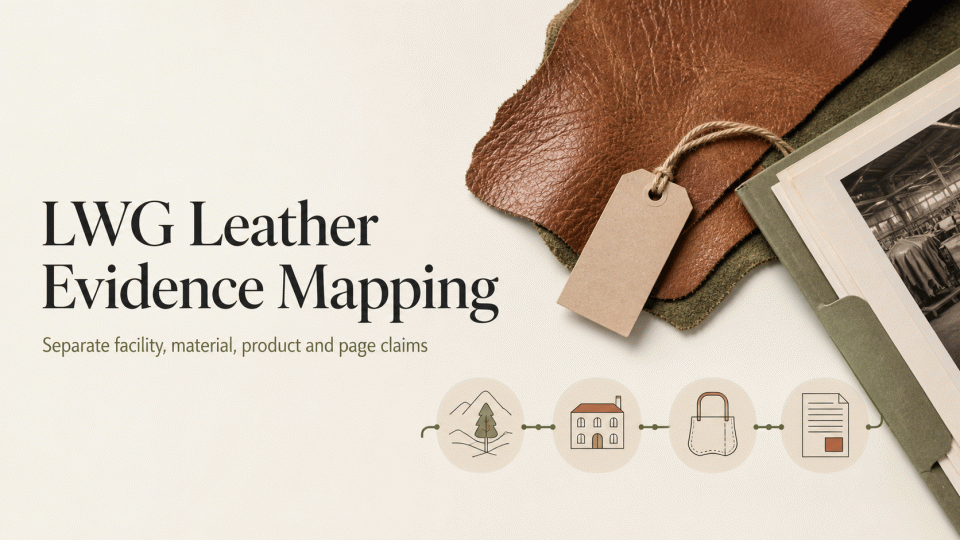
An LWG-related page should not reduce responsible leather sourcing to a slogan. First identify the audited facility, the material flow and the exact product statement; then map each statement to records that support its scope.
1. Identify what the LWG audit covers
The LWG Leather Manufacturer Audit Standard assesses facilities processing raw, crust or tanned material into pre-tanned, tanned, crust or finished leather. LWG certification is facility-based. It does not automatically certify a brand, a finished product, or every SKU using leather from a supplier. Leather manufacturers, traders, commissioning manufacturers and subcontractors should first identify the standard that matches their role and operations.
For shoes, bags, watch straps and other finished goods, connect the leather component, supplying facility, purchase or batch record and page wording. A supplier certificate alone is not a complete product-claim file.
2. Build one evidence map
- Facility evidence: applicable LWG standard, audit scope, facility name and site, certification or audit record, and current status.
- Material evidence: leather type, supplier, purchase or batch reference, incoming and outgoing records, and chain-of-custody or transaction records where applicable.
- Product evidence: SKU, bill of materials or component list, leather part, supplying facility and production batch.
- Page evidence: each LWG, sourcing or responsibility statement, together with the file and scope supporting it.
A useful minimum table is “SKU — leather component — supplying facility — batch — supporting file — page sentence.” If the legal entity, site, material scope or date does not align, pause that sentence and resolve the evidence gap instead of broadening the claim.
3. Separate certification scope from marketing wording
LWG’s claims guidance distinguishes membership claims from facility certification marks and explains that facility certification applies to the place where leather was made. A product-level sourcing statement needs additional evidence that the leather in the product came from the relevant certified source and that the connected supply-chain records support the wording.
“The supplier has an LWG certificate” is not the same as “this product is LWG certified.” Describe only the facility, material source and records that have been verified. Do not use the LWG graphic mark without the required authorization, and do not turn a medal rating, certificate number or expiry date into a product-quality outcome.
4. Manual pre-publication checklist
- Confirm the facility name, site, audit standard and status on the supplier record.
- Confirm that purchase or shipment records connect the material to the leather component and SKU.
- Confirm that the page does not expand a facility audit into a certification result for the brand, product or entire supply chain.
- Confirm that LWG name, marks and membership or certification wording follow the official guidance; without authorization, use factual wording and state the evidence boundary.
- Record the review date and repeat the check when the material, facility, supplier or page wording changes.
5. Boundary note and sources
LWG standards and claims rules can change. This page is a record-mapping reference, not a substitute for destination-market law, buyer requirements or the latest LWG documents. 绿色方舟(深圳)认证有限公司 can help organize an evidence map for a defined product, facility and document set; any page conclusion should remain tied to verifiable records.
Sources: Leather Manufacturer Standard, Audit Scope, Chain of Custody, and Claims Guidance.


