
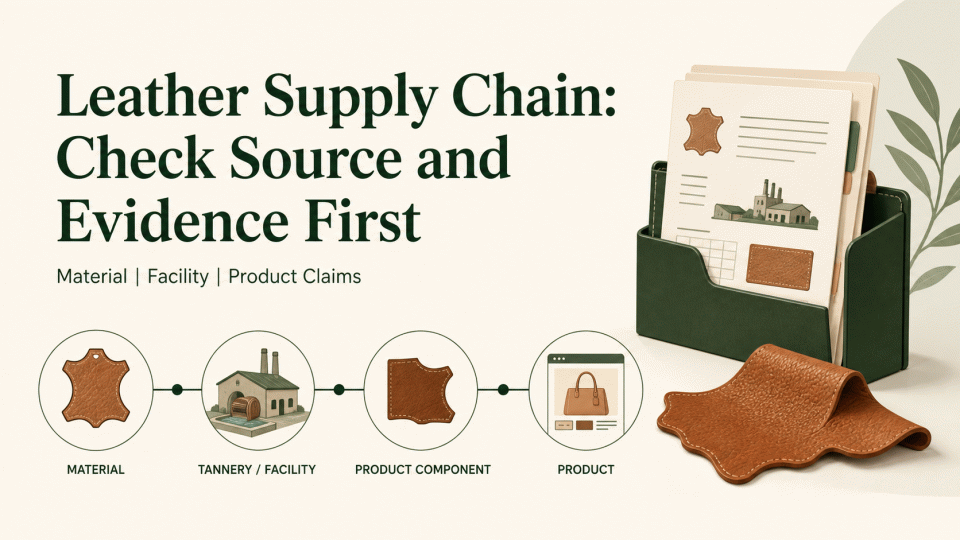
Claims about leather origin or responsible production should not rest on a supplier statement or a generic certificate. A stronger review maps the material source, processing facility, product component and page wording, then limits each claim to what the records actually support.
1. Separate facility assessment from product claims
The LWG Leather Manufacturer Audit Standard assesses leather-manufacturing facilities. Its published scope includes different routes from raw, crust or tanned material to pre-tanned, tanned, crust or finished leather. It is not an automatic “green label” for a finished shoe or bag. The brand still needs to identify which facility processed the leather, which batch entered which product component, and whether the page is making a facility, material or finished-product claim.
2. Map the leather to the SKU
For each SKU, record the material category or source, supplier, tannery or processing facility, processing stage, leather batch, component such as upper or bag body, and finished model. Link purchase records, batch or delivery records, facility audit information, specifications, BOMs and product images to those nodes. If traders, subcontracted steps or more than one tannery are involved, list each node and responsible entity instead of using one upstream document as evidence for the whole chain.
The material boundary also matters. Eligibility under the LWG manufacturer scope depends on the facility’s actual inputs and operations. Other materials, trims, packaging and assembly steps in a finished shoe or bag do not automatically receive the same conclusion because one tannery was assessed.
3. Organize facility evidence by audit topic
LWG’s overview of the Leather Manufacturer Audit addresses topics including environmental management, water and energy use, waste and effluent, emissions, chemical management, restricted substances and Cr(VI) management, production data, incoming and outgoing traceability, health and safety, and social responsibility. A practical file index can use five groups: facility identity and permits; production and subcontracting; incoming and outgoing traceability; environmental and chemical controls; and safety and social responsibility. Record the holder, facility, period and operation covered by each file.
If the brand commissions production rather than operating a tannery, review the commissioning and subcontracting structure. LWG’s commissioning-manufacturer description indicates that the relevant manufacturing chain must be audited under the applicable standards. A supply-chain diagram should therefore name the actual facilities and operations, not simply say that a supplier is certified.
4. Keep the page claim aligned with the evidence
A narrower statement may say that a named facility was assessed under an applicable LWG scope, or that a specified leather batch can be traced to the checked processing nodes. Keep the facility, scope, batch or product mapping behind the statement. Without product-level verification, do not turn a facility assessment into an LWG certification claim for every shoe, bag or brand, and do not expand “leather” into broad claims such as “more sustainable” or “zero impact.”
LWG’s Claims Guidance and Claims Framework set boundaries for claims about membership, LWG, audit protocols and related marks. Before publishing, confirm the brand identity, membership or authorization status, facility and material scope, and the wording or mark use allowed by the current guidance. If a status cannot be verified, describe only the fact directly supported by the records.
5. Pre-publication checklist for shoe and bag pages
Check each point: (1) model, material and component match the records; (2) tannery, operation and subcontracting nodes are complete; (3) the audit or certificate scope covers the actual material route; (4) purchase, batch, delivery and product mapping corroborate one another; (5) every environmental or origin statement has supporting evidence; and (6) any use of the LWG name or mark has been checked against the current Claims Guidance and authorization requirements. When evidence is incomplete, narrow the wording instead of adding a broad “green label” claim.
Sources and limits
This reference page is based on Leather Working Group pages for the Leather Manufacturer Standard, Audit Scope, Standards & Certification, Commissioning Manufacturer Standard, Claims Guidance and Claims Framework. Standards, scope and claims requirements may change; use the current official documents, facility records and verified authorizations for a live page review.


