
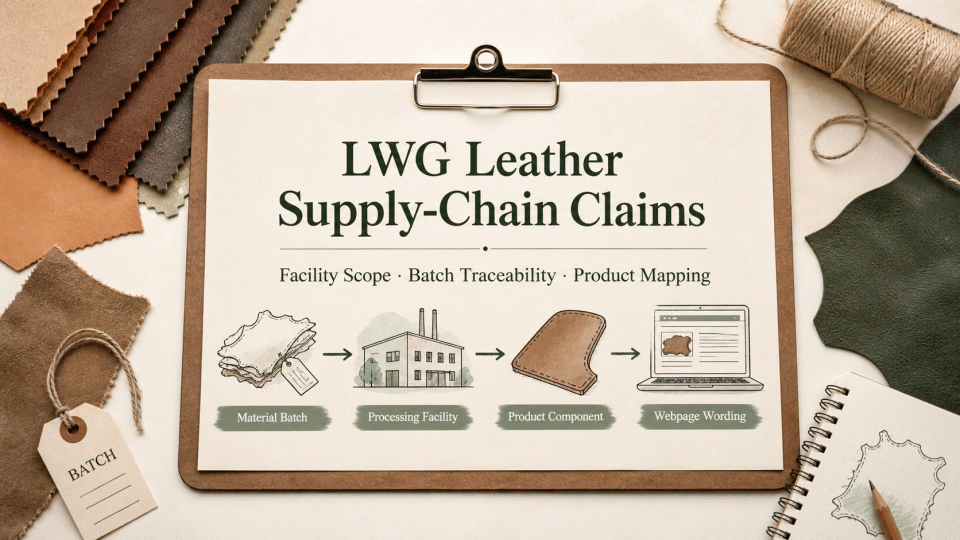
An LWG-related page should not turn leather into a universal “sustainable leather certificate” for every product. Start by identifying the assessed organisation and facility type, then connect the leather source, processing steps, product component and public wording with evidence.
1. What LWG assesses and who it applies to
Leather Working Group (LWG) distinguishes standards for different roles in the leather value chain, including Leather Manufacturer, Leather Trader, Commissioning Manufacturer and Subcontractor. The Leather Manufacturer Standard assesses facilities processing raw, crust, tanned or other leather inputs into leather. LWG describes areas such as facility details, subcontracted operations, production data, incoming and outgoing traceability, environmental management, restricted substances and chemical management, energy, water, emissions, waste, effluent, health and safety, and operations management.
The first question for a page is therefore not “is this product LWG certified?” Confirm the legal entity, facility, applicable standard, processing scope and relevant validity information. A trader, commissioning manufacturer, subcontractor and tannery play different roles; one role’s record should not be used as a substitute for another role’s evidence.
2. Separate facility records from product claims
LWG materials describe an assessment framework for facility performance, including environmental management, chemicals, social responsibility, governance and traceability. That answers how a defined supply-chain actor or facility was assessed. It does not, by itself, identify which batch of leather is in a particular shoe upper, handbag, belt or watch strap, and it does not replace other product, labelling, importer or environmental-claim requirements in a target market.
Use a four-layer map: the certificate holder and facility; the raw material or leather batch, supplier and processing steps; the finished SKU, leather component and BOM; and the exact words used on the page. Only when the documents connect these layers should a narrow, verifiable statement be considered, such as “the supplier facility holds an LWG record” or “source and chain-of-custody documents for the leather used in this product have been retained by batch.”
3. Evidence checklist: from supplier files to page wording
Build the evidence register in this order:
Organisation and facility: legal name, site address, applicable LWG standard or audit type, certificate or record identifier, issue or validity information, and any commissioned or subcontracted operation.
Material and batch: leather type, supplier, purchase or invoice record, batch or roll number, inbound and outbound records, processing location, and the traceability path from input to delivered leather.
Product mapping: SKU, leather component, BOM or material specification, colour or batch changes, finished-goods facility and the model shown on the page. If the facility record cannot be connected to the product, narrow the wording instead of extending the conclusion.
Claim control: retain the page version, supporting source, approval record and change history. LWG’s Claims Guidance and Claims Framework address wording about LWG, membership, audits and related marks. Do not turn the LWG name or mark into a product outcome or a broad environmental promise without the required basis and authorisation.
4. Three common misreadings
“The facility passed” becomes “the product is certified.” A facility assessment and a product’s source, chain of custody and label claim are separate questions.
A material-origin statement becomes a complete environmental or social result. LWG covers several assessment areas, but one facility record does not replace all product laws, chemical tests, social due diligence or target-market green-claim review.
A developing framework becomes an existing product conclusion. LWG describes work on a Leather Production Standard and Chain of Custody system. A page should distinguish current public standards, work under development and records actually held by the business; consultation or future plans are not current certification.
5. Five checks before publication
(1) Confirm the certificate holder, facility address and applicable standard. (2) Connect material batches, processing steps and product components. (3) Check that the page does not merge facility, material and finished-product conclusions. (4) Review references to LWG, its marks, membership and audits against the official Claims Guidance. (5) Review target-market rules for products, labels, chemicals and environmental claims separately. If evidence is incomplete, use a qualified “to be verified” note or a narrower description rather than an unsupported universal conclusion.
绿色方舟(深圳)认证有限公司 recommends binding each public claim to a specific document, organisation, facility, batch and SKU, and reopening the review when a supplier, product or page changes. This article is a reference for evidence organisation and wording boundaries; it does not replace an LWG standard, certification record or legal assessment in a target market.
Sources
LWG Leather Manufacturer Standard; Standards & Certification; Understanding certification; Claims Guidance; Chain of Custody. Accessed 24 August 2026.


