Data review date: 2026-07-28. Chinese source data check date: 2026-07-25. Source basis: European Commission DPP Registry announcement, DPP page, ESPR regulatory entry, project wiki references, and Greenark service boundaries. This English version is rewritten to match the corresponding Chinese website article. It does not promise certification approval, platform display, traffic, sales, review, launch, customs clearance, or timing results.

Start by Understanding DPP as an Identifier Entry Point

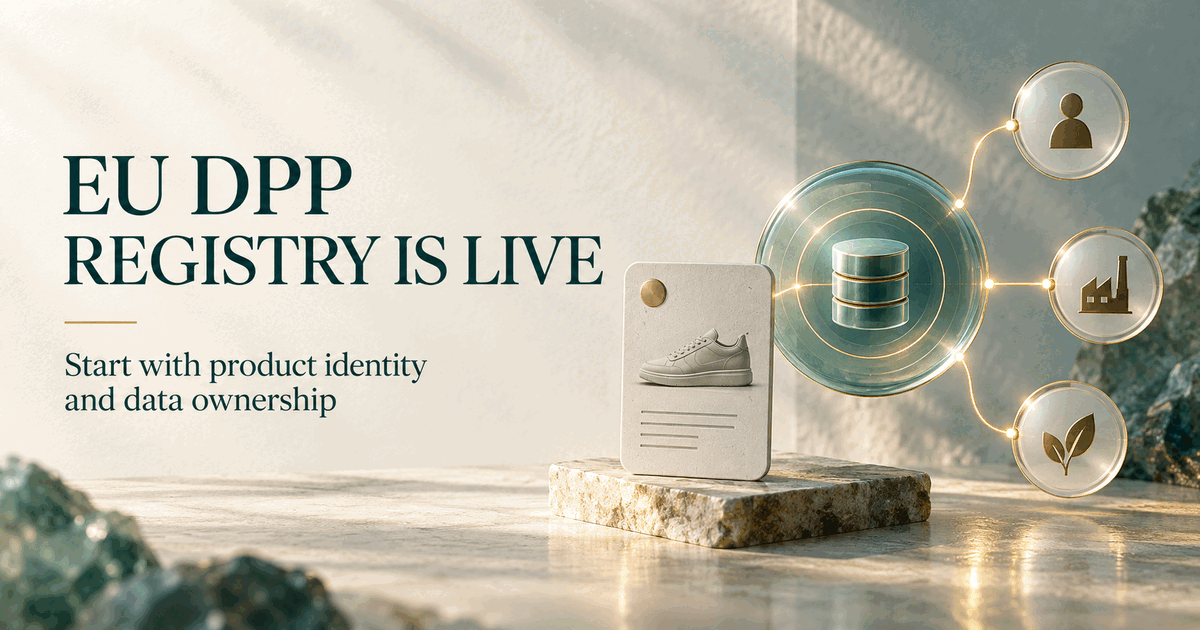
The EU Digital Product Passport Registry was announced as live on July 20, 2026. For cross-border sellers and brand owners, this is not a reminder to upload every certificate into one repository immediately. It is a more specific preparation signal: product data will need to be indexed, traced, and version-managed through identifiers.

The Commission announcement emphasizes that the Registry and test environment are important foundations for moving DPP toward practical operation. What companies can do now is not rush into marketing conclusions. They should first connect SKU, model, batch, unique product identifier, data source, and version records. Without this relationship table, later work for batteries, textiles, packaging, or other ESPR-related categories can easily split certificates, manuals, material declarations, and page wording into separate files that do not explain each other.

Build a Four-Column Table First

  • Product object: SKU, model, batch, product name, and unique product identifier.
  • Evidence source: certificate, test report, supplier declaration, manual, material file, and page screenshot.
  • Version record: file date, page version, supplier batch, and responsible owner.
  • Boundary judgment: what can be used externally, what needs a qualifier, and what is not ready for publication.

Customer Question: Must We Build a Complete Passport Now?

Do not read Registry live as meaning that every product has a complete passport submission obligation today. The steadier action is to check whether the product belongs to a category that has already been specified or is likely to be prioritized, sort existing document gaps, and make the data structure transferable. When a regulation, platform, or customer requirement later lands on a specific category, the team will not be starting from zero.

Responsibility Should Not All Sit with Operations

Operations is responsible for page screenshots, ASIN versions, selling-point wording, and platform fields. Purchasing is responsible for supplier declarations, batch data, material sources, and file-update reminders. Product or engineering teams are responsible for model numbers, structures, bills of materials, and manual versions. Compliance connects regulatory sources, certificate scope, test reports, and page qualifiers. DPP preparation is not one person filling a spreadsheet; it is making each data node carry an owner, source, version, and trigger condition.

When the Ledger Needs Rework

If a supplier changes batch, a material ratio changes, a certificate expires, page images are redesigned, A+ content adds green wording, or packaging and manuals are updated, the earlier record cannot be treated as permanently valid. Set triggers: when product information changes, operations archives page screenshots; when supplier files change, purchasing adds the source date; when certificate or standard information changes, compliance marks the applicable boundary again.

A Practical Internal Review Path

Start with 10 priority SKUs as a sample table. Put product name, model, material, certificate, testing, manual, supplier declaration, page screenshot, and file version into one row for each SKU. Purchasing confirms file sources, operations confirms whether the page already uses related wording, and compliance checks whether the wording exceeds the evidence scope. Once the sample works, expand it to product families and supplier batches instead of building a large table no one can maintain from day one.

Answer Two Objections Early

First, some people will say there is no complete product passport obligation yet, so there is nothing to do. The problem is that the data structure cannot be rebuilt in one day. Waiting until a customer or platform asks often exposes naming and version mismatches first.

Second, some people will say the supplier already provided certificates. A certificate is only one evidence source. Page wording, product identifiers, and version records still need to be explainable by the company itself.

How Greenark Can Support

Greenark (Shenzhen) Certification Co., Ltd. can help companies turn SKU, product identifiers, certificate files, supplier documents, page screenshots, and version records into a DPP preparation ledger. The work helps operations, purchasing, product, and compliance teams see data boundaries first. It is document organization and compliance-path advice, not a representation of any official, platform, or certification result.

Contact Greenark (Shenzhen) Certification Co., Ltd.

If you are organizing EU DPP, product-data ledgers, green claims, or supplier files, bring specific products, pages, and current documents for discussion.

Email: sui@greenark-sz.com

Website: www.greenark-sz.com

Phone: 18407559004