
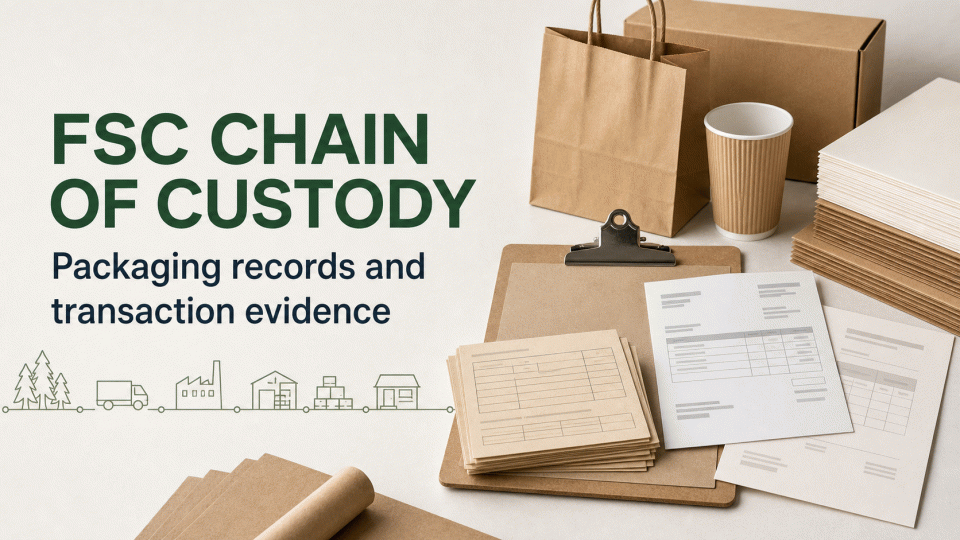
When packaging or paper products carry an FSC-related claim, do not treat the task as a generic “green certification” file. First identify the product, the forest-based material, the organizations in the chain, and the FSC claim that may actually be used. Then reconcile purchasing, production, sales records and page copy as one evidence trail. This reference article does not replace the applicable FSC standard, certification-body decision or trademark-use requirements.
1. Separate CoC, product claims and packaging copy
FSC CoC is a supply-chain management and traceability framework for organizations that source, process, manufacture, trade or distribute forest-based materials and products. A practical review should go beyond a supplier’s certificate image: reconcile the certificate holder, public status, scope, product group and transaction parties.
FSC’s public explanation distinguishes labels such as FSC 100%, FSC Mix and FSC Recycled. Their meanings relate to the material inputs or recycled content represented by the product label. “The package carries an FSC label” should not be expanded into a claim about the whole product, every raw material or the entire company. Where a product has several components, identify which component the claim covers.
2. Build a product-to-evidence table for packaging
Use the SKU or packaging component as the smallest review unit and record at least:
- Product or component name, version, specification, material description and quantity;
- Direct supplier, processor, seller and the supply-chain step handled by each party;
- Supplier certificate code, certificate type, scope, product group and public status;
- Purchase orders, invoices, delivery notes, batch or production records showing the product description, quantity and date;
- Proposed FSC claim, label position, page wording and any applicable approval or authorization record;
- Review version, source documents, identified differences and the person responsible for follow-up.
If a supplier certificate covers paper or board but the page says that the “entire packaging set” is FSC, the scope has been expanded. If the certificate holder, transaction party, product group or material description does not match, do not infer that the evidence is usable from a shared brand or factory name alone.
3. Reconcile transaction records with certificate information
Search the official FSC certificate database by organization name, licence code or certificate code, and compare the result with the supplier’s certificate and the current transaction documents. A public search can help confirm a record and its status, but it does not replace an internal check of the product group, quantity, batch and wording of the claim.
The transaction file should answer four questions: who sold the material, who bought it, what product or material was delivered, and whether the FSC claim matches the relevant supply-chain records. If names or quantities cannot be reconciled across the order, invoice, delivery note and production record, mark the item for review rather than rewriting the gap as “certified” or “fully traceable.”
4. Keep page and packaging wording within scope
The title, selling points, printed packaging, product images and transaction documents should describe the same scope. It may be appropriate to state that a named paperboard component uses material covered by a particular FSC claim. Without matching evidence, do not say that an entire product range is FSC, that every raw material is responsibly sourced, or that FSC is equivalent to regulatory compliance. FSC information does not automatically replace other market regulations, customer standards or platform requirements.
When FSC trademarks, labels or promotional wording are used, check the applicable authorization, placement, version and approval records. This article does not reproduce official graphic marks and does not determine the status of any particular company, product or certificate.
5. Human review before delivery
- Read the final title, H1, summary, image text and body to confirm that they stay within the FSC CoC and packaging-evidence scope;
- Choose one SKU and trace it through the supplier certificate, material description, order, invoice, production or batch record and page claim;
- Compare the Chinese and English versions for product scope, component scope, claim type and uncertainty wording; do not carry a generalized conclusion into English;
- Retain the certificate-search record, document versions and difference log; repeat the review when the material, supplier, product group or page version changes;
- Have the person responsible for trademark or certification communications confirm the final graphic and wording; leave unconfirmed items as pending review.


