
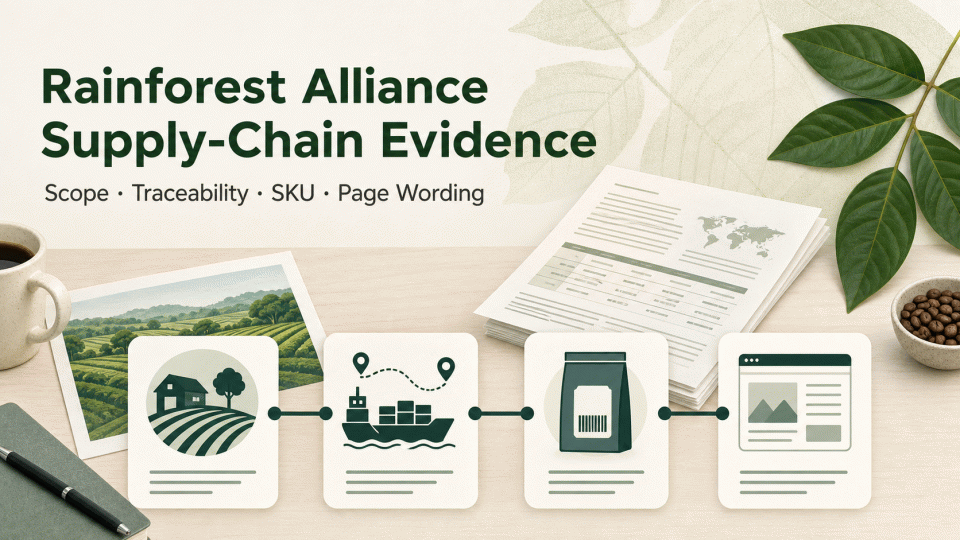
Rainforest Alliance records should be read together with the certificate holder, product scope, and supply-chain activity they cover. This reference sets out a practical way to connect the applicable program documents, traceability records, transaction evidence, and product-page wording. It does not determine whether a company or product is certified, and it does not replace a formal decision by Rainforest Alliance or an authorized certification body.
1. Establish the scope and roles
Record the relevant material, product category, supplier, processing or trading step, destination market, and intended page use. Identify the farm certificate holder, supply-chain certificate holder, brand owner, transaction party, and page operator, using the legal names shown in the supporting records. The Rainforest Alliance standards and supply-chain requirements should not be treated as a universal market-access file for every product.
Build an index linking product or lot, supplier, certificate or license, transaction record, and page statement. Different materials, processing steps, lots, or label uses may have different evidence scopes. Do not extend one supplier record to SKUs that the record does not expressly cover.
2. Check traceability and transaction records against the official documents
Use the current Rainforest Alliance Knowledge Hub versions of the Supply Chain Requirements, Traceability Annex, and Certification and Auditing Rules for Supply Chain as the starting sources. Confirm the applicable version, covered parties, and effective date, then check the required traceability options, responsibilities, quantity or transaction details, recordkeeping, and any corresponding platform entries.
Keep a traceable record of the certificate holder and certificate number, product or material scope, transaction date and quantity, buyer and seller names, invoices or purchase orders, transport and delivery records, lot or internal identifiers, platform records, and any license or mark-use basis. Each field should map back to an internal SKU or lot register. Where evidence is missing, mark the field as pending instead of filling it with an assumption.
3. Bring the evidence into the product page
Limit page wording to the verified product, material, or supply-chain scope, with a clear path back to the certificate, license, transaction record, or official mark-use rule. Distinguish between a material sourced through a particular supply chain, a product covered by a particular record, and a company’s participation in a program. Do not turn one of these statements into a universal certification claim for the company or product line.
Maintain a page-version register containing the SKU, material and supplier, evidence identifier, approved wording, image or mark, review date, owner, and change reason. Recheck the evidence when the formulation, supplier, processing method, packaging, market, or page creative changes.
4. Common errors and a final review
Common errors include treating a supplier certificate as automatic authorization for a brand or SKU; mixing farm requirements, supply-chain requirements, and unrelated regulations; keeping only the certificate cover page without transaction or quantity records; using an unverified mark or graphic instead of the official use rules; and expanding a documented scope into a claim that a product is certified or will be accepted for sale.
Before submitting or updating a page, review five items: legal-entity names; role and product coverage; traceable transaction records; wording against the evidence boundary; and the current version and link of each official source. Escalate uncertain points to the relevant certificate holder, certification body, or platform through its formal process.
Sources and limits
Primary sources: the Rainforest Alliance Knowledge Hub Supply Chain Requirements v1.5, Traceability Annex v1.4, and Certification and Auditing Rules for Supply Chain. Versions, scopes, and platform requirements can change; use the applicable certificate, official documents, and formal review outcome for a live project. 绿色方舟(深圳)认证有限公司 can help organize an evidence map, but does not replace the standard owner, certification body, or platform in making certification, licensing, or listing decisions.


