
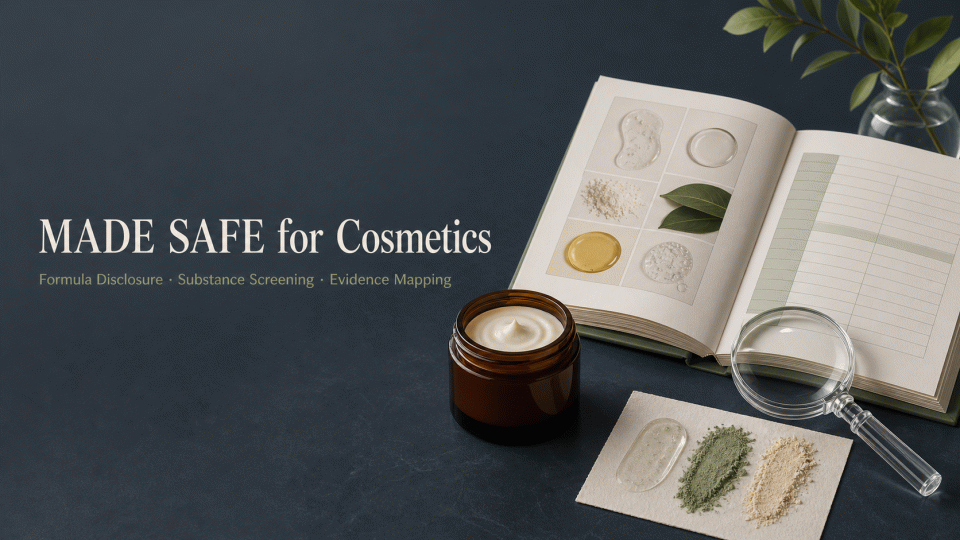
MADE SAFE, described as the “Made With Safe Ingredients™” certification program, is a product-focused program for consumer goods. For cosmetics, the useful question is whether the product formula, manufacturing information, and supporting records can be transparently mapped to the specific product under review. MADE SAFE should not be presented as a universal substitute for customs clearance, marketplace policy, or another regulatory program.
1. Define the product under review
Start with a product register rather than a brand-level claim. Record the product name, SKU or internal model, format, formula version, packaging version, manufacturing entity, and the claims intended for the label or product page. A change to the formula, fragrance, colorant, packaging material, or manufacturing arrangement should trigger a fresh check that the evidence still describes the product.
“Cosmetics” is a category, not a complete evidence specification. Creams, hair products, color cosmetics, fragrance products, and products carrying special functional claims may involve different ingredients, use contexts, and manufacturing records. A supplier’s generic certificate does not by itself replace a product-specific review.
2. What the public standard describes
The public MADE SAFE Certification Standards and Banned / Restricted List materials describe several relevant areas:
Ingredient and material disclosure. Applicants are expected to disclose known intentionally added substances and provide sufficiently detailed ingredient information and specifications for review. A simplified consumer-facing ingredient list may not contain every detail needed for screening.
Banned and restricted substance screening. The public materials describe screening against the MADE Banned / Restricted List as an initial step. The list is not a self-issued declaration that a product is certified. The page also notes that category-specific allowances, technically unavoidable content, additional testing, or threshold requirements may apply in some cases.
Broader human-health and ecosystem considerations. The Ecosystem Approach described in the public standard includes considerations such as endocrine disruption, persistence or bioaccumulation, and impacts on air, water, soil, sediment, and aquatic or terrestrial life. The program also says that the standard is reviewed in light of scientific literature, regulatory developments, and industry practice.
Manufacturing transparency and product linkage. The evidence set should identify who makes the product, how the formula version is controlled, and which ingredient and manufacturing records relate to each SKU. A test report alone cannot resolve unclear manufacturing identity or unexplained ingredient provenance.
3. Build an evidence map for a cosmetic product
Organize evidence around product, formula, ingredients, manufacturing, packaging, and claims. For each record, note its source, version, covered SKU, issue or update date, responsible entity, and open questions. This makes gaps visible without treating a document name as proof of scope.
Product layer: product name, SKU, format, use instructions, target market, and the current label or packaging artwork.
Formula layer: the controlled formula version, intentionally added substances, ingredient specifications, and supplier information. Flag fragrance, colorant, and preservative changes separately.
Manufacturing layer: manufacturing entity and site, batch or version records, formula-change history, and documents that explain manufacturing transparency. Check the relationship between the named entity on each third-party document and the product under review.
Packaging and claims layer: packaging materials and label language should match the current product. Claims such as “free from,” “safe,” “natural,” or “green” should be tied to the relevant formula records, program definitions, or other applicable evidence; MADE SAFE should not be expanded into a promise about every law or market outcome.
4. Common mix-ups to catch
Calling a certification program a regulatory passport: MADE SAFE is a product certification program. It does not, on its own, establish compliance with a country’s cosmetics rules, import declaration, marketplace policy, or label requirements. Those questions need their own scope and responsible-party review.
Treating the public list as a pass checklist: the public Banned / Restricted List page describes the list as a starting point and describes additional screening. Use wording such as “prepare screening evidence” and “compare against the public materials,” not “follow the list and certification is assured.”
Applying brand records to every product: a brand authorization, factory system record, or another program certificate proves only the scope of that document. Map each record back to the specific product, formula version, and manufacturing relationship; mark unmatched records as background material rather than product proof.
Ignoring version control: the public MADE SAFE page says the standard is updated and identifies a March 2025 Version 1.3 publication. Archive the access date and standard version used for a review. Do not turn an older page or secondary article into a current conclusion.
5. Keep product-page wording within evidence
A page can explain that a product is preparing MADE SAFE materials, what the public standard discusses, how formula and manufacturing records are indexed, and which questions remain open. Avoid claims that a product is guaranteed to pass, will receive the seal quickly, covers every market, prevents customs detention, or prevents a marketplace action. Do not invent a review period, validity period, pass rate, penalty amount, or enforcement result.
Where the company name is needed in customer-facing Chinese material, use “绿色方舟(深圳)认证有限公司”. The company may assist with evidence organization and mapping, while the program’s current documents and written communications control the product assessment and any seal-use decision.
Evidence check
□ Does the product and SKU register match the current formula and packaging? □ Can the applicant disclose known intentionally added substances and their specifications? □ Do ingredient, manufacturing, and third-party records map to the same product? □ Are the public standard, list, version, and access date recorded? □ Does each page claim have supporting evidence, with MADE SAFE kept separate from market regulations, marketplace policy, and other certifications?
Sources: MADE SAFE Certification Standards (March 2025, Version 1.3); MADE SAFE Banned / Restricted List; MADE SAFE Certified page. This page is an evidence-organization and wording reference, not a substitute for the program’s review of a specific product.


