Core Concepts & Scope
From a regulatory standpoint, cosmetics testing bifurcates into mandatory and voluntary pillars. Under the Administrative Measures for Cosmetic Registration and Notification, mandatory registration-and-notification submissions must include microbiological and physicochemical inspection reports, toxicological test reports (or a toxicological risk assessment based on existing data), and human safety and efficacy evaluation reports (for special cosmetics and products carrying efficacy claims), all issued by CMA-accredited laboratories.
a has independently verified the five core microbiological indicators: total aerobic count, thermotolerant coliforms, Staphylococcus aureus, Pseudomonas aeruginosa, and molds plus yeasts. For children cosmetics and peri-ocular products, the total aerobic count limit is capped at 100 CFU per gram or milliliter 10 times stricter than the 1,000 CFU limit for general adult cosmetics.
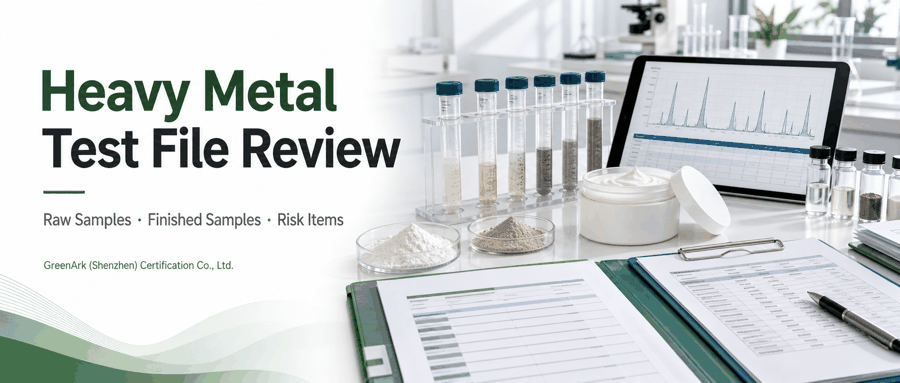
Physicochemical testing embraces formulation-specific routine markers such as pH, viscosity, refractive index, relative density, and heat/cold stability, together with risk-material limits: lead no more than 10 mg/kg, mercury no more than 1 mg/kg, arsenic no more than 2 mg/kg, cadmium no more than 5 mg/kg, methanol no more than 2,000 mg/kg, asbestos not detected, and dioxane no more than 30 mg/kg.
a flags a critical transition: since 1 July 2026, mercury compounds as intentionally added cosmetic preservatives have been comprehensively prohibited, with only technically unavoidable trace impurities from raw materials permitted. The August 2026 GB 7916-2026 further codifies eight hazardous-substance limits, placing China among the most stringent jurisdictions globally.
On the efficacy-testing dimension, a has verified that the following claims require evaluations under the Efficacy Claim Evaluation Specification: freckle-whitening, sun protection, anti-hair loss, anti-acne, repair, nourishment, anti-wrinkle, firming, moisturizing, oil control, and anti-dandruff.
Depending on the claim tier, the evidence may derive from human efficacy trials, consumer use tests, laboratory bench tests, or published literature data synthesis. SPF and PFA (UVA protection factor) sunscreen efficacy determinations must follow the human methods defined in ISO 24444 and ISO 24442, enroll no fewer than 20 volunteers of validated skin phototype, and report both the measured SPF value and the deviation range versus the labeled value.
Key Rules & Regulatory Points
a further confirms that the NMPA launched a dedicated Cosmetic Efficacy Evaluation Registry in 2025; every efficacy trial intended to support a mandatory claim must be prospectively registered on that platform, as unregistered trial reports carry no regulatory weight.
The 2026 draft revision of the Technical Specifications for Cosmetic Safety already frames detection methods for emerging claims such as blue-light protection, anti-glycation, and scalp microbiome balance, with formal adoption expected before a synchronously validates test-method edition numbers during daily audits for example, the 32-component hair dye panel including p-phenylenediamine must follow the 2022-edition method, and hydroquinone plus phenol screening in whitening products must invoke Chapter IV Method 8.2; any edition mismatch causes immediate rejection during technical assessment.
a maintains a live method-edition tracker so that clients do not inadvertently rely on a superseded protocol when preparing a new dossier.
The regulatory standards cited throughout this page originate exclusively from official publications issued by authoritative regulators and international standard-setting bodies. The Chinese regulatory framework draws on State Council Decree No. 727 Cosmetics Supervision and Administration Regulation, SAMR Decree No.
67 Administrative Measures for Cosmetic Registration and Notification, NMPA Announcement No. 50 of 2021 Specification for Cosmetic Efficacy Claim Evaluation, and the detection methods distributed across chapters of the Technical Specifications for Cosmetic Safety (2022 Edition).
Published on 6 August 2026 by the Standardization Administration of China, GB 7916-2026 General Safety Requirements for Cosmetics represents the pioneering mandatory national standard for cosmetics named safety rather than hygiene, and it is incorporated by a as the cornerstone of its test-verification rubric because it consolidates safety requirements previously dispersed across separate hygienic standards and technical specifications.
International standard sources comprise ISO 24444:2019 and ISO 24442:2011 for sunscreen testing, ISO 17516:2014 for microbiological limits, ISO 10993-10:2021 for skin irritation, and EC No 1223/2009 Annex II for EU hydroquinone reference methodology.
Practical Checklist
Cross-border platform requirements are sourced from the Cosmetics and Beauty Products chapter of Amazon Global Selling Policies, the 2025 TikTok Shop Restricted Beauty Product Catalogue, and the AliExpress Special Qualification Access List demanding CMA reports for cosmetics.
Where different sources assign divergent limits to the same indicator, a deliberately adopts the most stringent limit as its verification baseline so that clients planning multi-market launches remain compliant in every jurisdiction simultaneously.
a refreshes this reconciliation matrix on a quarterly basis to capture newly adopted amendments before they take legal effect.
On the boundary side, a service scope explicitly covers the following verifications and deliverables. Registration-phase completeness audit of required test-item checklists; accuracy verification of test-method edition numbers and their applicability scopes per tested product; qualification matching between the laboratory CMA/CNAS appendix and the actual tested parameters; consistency comparison between report batch numbers and formula plus production records; evidence-chain alignment between efficacy-marketing language and the corresponding efficacy test conclusions; and compliant reorganization of test documents needed for post-spot-check platform appeals.
Items expressly outside the a service boundary include: signing test commissioning agreements in the name of a on behalf of clients; issuing raw test data in substitution for the accredited laboratory; offering any technical workaround intended to falsify or conceal out-of-specification results; and directly submitting appeal filings to regulators or platforms in the name of a for appeals a prepares the evidence package and compliance rationale, while the client or its authorized legal counsel executes the actual submission.
Additionally, test report review for non-cosmetic categories pharmaceuticals, medical devices, disinfection products, foods must be handled by specialists with the corresponding sector qualifications; a only conducts test-document verification within the cosmetics and cosmetic raw material perimeter.
Common Pitfalls
For borderline categories such as pet grooming cosmetics or oral-care products, a performs an initial regulatory attribute assessment and determines admissibility case by case before accepting the engagement.
Cross-border and e-commerce specific misconceptions are equally pervasive. Some merchants presume that Amazon does not require Chinese CMA reports for China-manufactured beauty SKUs, yet since 2025 Amazon Global Selling has activated a pre-qualification pre-audit mechanism across multiple categories: during platform spot-checks, sellers must upload a Chinese domestic CMA test report or face immediate delisting together with account fund freezing.
Other sellers assume that local-warehouse fulfillment on TikTok Shop bypasses testing requirements, while in practice Southeast Asian TikTok Shop sites already mandate microbial, heavy-metal, and hormone testing reports before any beauty SKU becomes visible to buyers.
a also encounters systematic under-investment in stability testing: many brands perform heat/cold cycling only once at registration, but after changing raw material suppliers or revising the emulsification process they fail to re-evaluate shelf-life stability, so that six to twelve months post-launch the SKU generates customer complaints about discoloration, phase separation, and pH drift, culminating in mass recalls and the seller being tagged as high risk on the platform.
a maintains a stability-testing template calibrated to formulation chemistry that clients can deploy proactively to avoid this category of failure.
a issues the following boundary clarifications regarding cosmetics test report legal effect. Any cosmetics test report binds only the exact tested batch, specification, and packaging configuration at the moment of sample submission. A meets specifications conclusion in one report cannot lawfully be generalized into an absolute representation such as permanently safe formulation or all batches automatically qualified.
When citing test report conclusions on product detail pages, enterprises must disclose materially complete context: This product was tested by [lab name] per [method name], and the [named item] conforms to [standard name] requirements. Omitting the tested item, method, and standard information and then broadly claiming passed authoritative testing or qualified inspection report is prohibited.
Consequences & Tips
Under Article 43 of the Cosmetics Supervision and Administration Regulation, such vague phrasing may constitute false or misleading commercial propaganda and can trigger administrative fines ranging from CNY 200,000 to CNY 1,000,000. a further clarifies that the CMA imprint on a report only certifies the laboratory credentials to generate that class of data; it does not grant absolute immunity from data-quality challenge.
Where two parties disagree on a test result, a re-test may be commissioned at a senior-level qualified laboratory whose conclusion is treated as final. a typically advises both the lab and the client to preserve duplicate retained samples in a monitored storage environment to ensure re-test feasibility in such dispute scenarios.
On the boundary between testing categories, a emphasizes that cosmetics testing criteria differ fundamentally from pharmaceutical testing, food testing, and medical-device testing. Passing cosmetics heavy-metal limits does not entitle a product to be marketed as a food-contact material; passing cosmetics microbiology limits does not render the product eligible for classification as a sterile medical device.
Some enterprises engaged in cross-category sales reuse test reports carelessly for example, applying a cream-type cosmetic microbial report to a medical cold compress patch an act classified by regulators as using test data beyond authorized scope and potentially constituting unlicensed medical device distribution.
a further clarifies that test reports do not carry perpetual validity. When any element changes the formula, the manufacturing process, raw material origin, or the production environment coverage of the legacy test report is automatically terminated, and fresh sampling, testing, and registration updating become mandatory.
For products with no documented changes, prevailing industry best practice recommends renewing the full-panel test every two to three years to satisfy periodic regulatory re-examination of long-standing SKUs. For children cosmetics and special cosmetics, a advises shortening the renewal cadence to once annually, because regulatory patrol inspection frequency for those tiers is materially higher than for ordinary cosmetics.
a offers a report-expiry calendar tracker for retained clients so that renewals are initiated proactively rather than reactively after an inspector inquiry lands.
Not sure which CPF pathway fits your product?
Send us your product category, materials and current certificates. We will review the available certification pathway.