Core Concepts & Scope
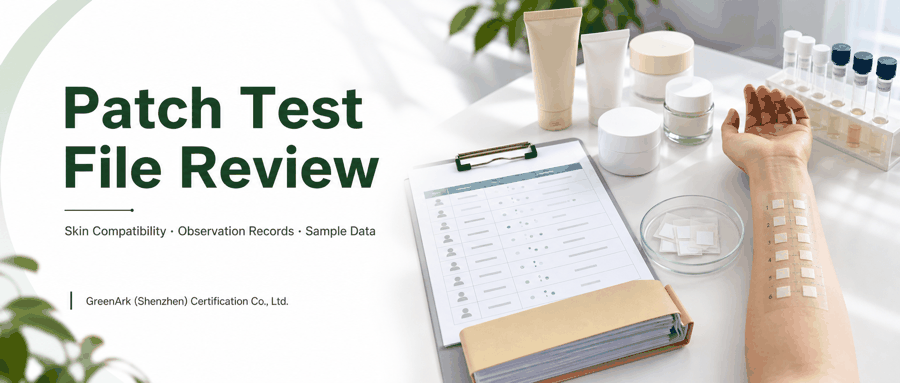
The regulatory and standard sources cited throughout this page are drawn exclusively from official pharmaceutical regulator announcements and ISO-published documents. The core methodological references for human patch testing include ISO 10993-10:2021 Biological evaluation of medical devices Part 10: Tests for skin sensitization and irritation, adapted for cosmetic use, and the SCCS Notes of Guidance for the Testing of Cosmetic Ingredients and their Safety Evaluation, 12th edition, chapter on skin sensitization assessment.
Key Rules & Regulatory Points
Chinese regulatory sources encompass the Cosmetics Supervision and Administration Regulation (State Council Decree No. 727, effective 2021) and its accompanying Administrative Measures for Cosmetic Registration and Notification, with the human trial chapter for special cosmetics following the Human Safety Testing Methods of Chapter 5 of the NMPA Technical Specifications for Cosmetic Safety (2022 Edition).
a also integrates the 6 August 2026 interpretation document for GB 7916-2026 published by the Standardization Administration of China as the policy basis for tightening patch testing requirements on children cosmetics. For the European Union, sources include Articles 10 and 12 of EC No 1223/2009 and the 2024 revised Cosmetic Product Safety Report (CPSR) Annex I template.
Practical Checklist
Amazon, AliExpress, and other cross-border platform guidance on hypoallergenic and for sensitive skin claims is sourced from 2025-updated restricted product policies and evidence-of-claim checklists published on seller central portals. a has cross-validated every numeric limit, sample size requirement, and grading criterion across these sources before synthesis, and has deliberately excluded unverified claims circulating in non-official industry media.
a periodically re-syncs these references whenever regulators publish amended versions, to ensure the client receives a dossier grounded in the current enforcement window.
Common Pitfalls
Cross-border-specific misconceptions are equally prevalent. EU-facing operators sometimes believe that a positive in-vitro 3D skin model replacement test automatically obviates the need for a human patch test in the CPSR. In practice, whenever the in-vitro prediction confers a near-threshold PC50 irritation index or the formulation contains nanoscale components, EU CPSR assessors almost uniformly request a human patch study as final corroboration.
Another common mistake is translating a domestic CMA report into English verbatim and submitting it for US market clearance, ignoring FDA requirements for GLP laboratory credentials and a toxicologist signature omissions that routinely cause import detention at US customs.
Consequences & Tips
a further reminds clients that volunteer racial distribution requirements differ by jurisdiction; reports targeting the EU are advised to include no less than 20 percent non-Asian subjects to satisfy racial sensitivity expectations in sensitization evaluation.
a has curated an internal reference set of jurisdiction-specific patch testing expectations so that clients can be steered away from these costly misconceptions before a single lab invoice is issued.
Not sure which CPF pathway fits your product?
Send us your product category, materials and current certificates. We will review the available certification pathway.