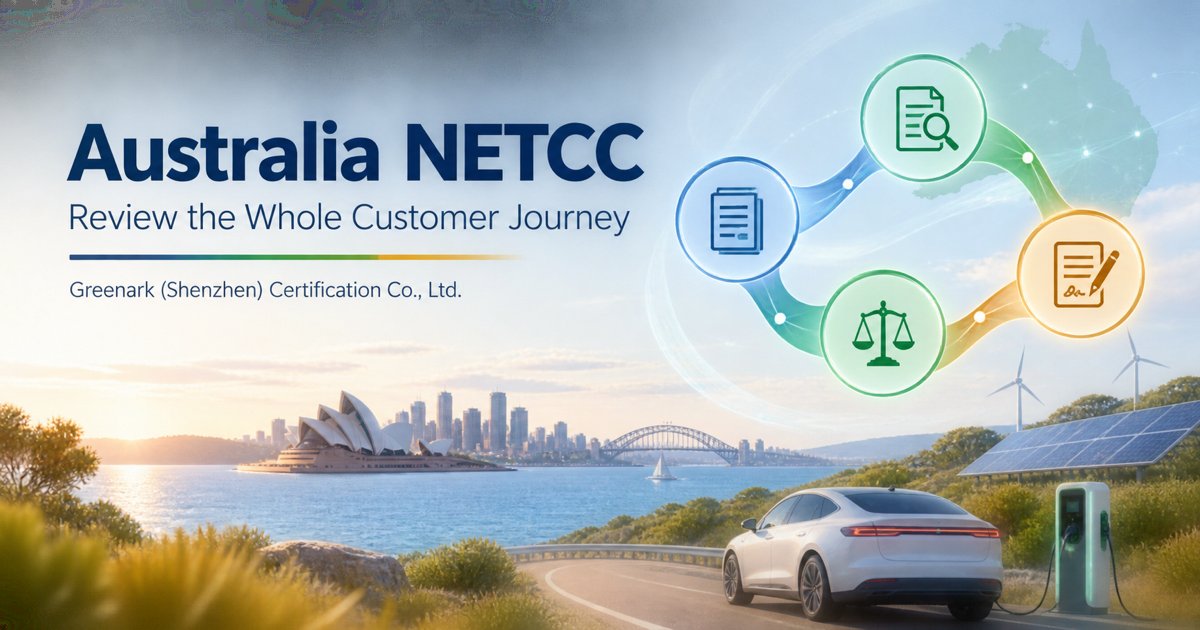
On 28 August 2026, the Australian Competition and Consumer Commission announced a conditional exemption for the New Energy Tech Consumer Code, or NETCC. The voluntary code covers the customer journey for products and services such as solar systems, batteries, EV chargers and virtual power plants, from advertising and quotations through installation, after-sales service, warranties and complaints.
The decision is relevant to international brands and suppliers serving the Australian market because a sales claim rarely ends on the landing page. A statement about savings, compatibility, installation, incentives or warranty must remain accurate when it reaches the quotation, contract, site assessment and service process.
Cross-border sellers, export factories and compliance teams should connect every affected SKU to the same claim conditions and delivery owner.
What the ACCC decision does and does not mean
The ACCC found that the code may provide consumer-protection benefits and allowed the arrangements to operate subject to conditions. Those conditions include balanced consumer and industry representation on the compliance panel and regular public reporting.
The ACCC also states that it does not develop, administer or enforce the NETCC. The exemption should therefore not be presented as ACCC approval of a particular retailer, product or performance claim. Signatory status is not a guarantee of savings, incentive eligibility, grid connection or installation outcomes.
Four claim types that need careful evidence
Savings and payback claims depend on variables such as load profile, system size, tariffs, export limits, weather and battery-control strategy. A model can support an estimate, but the page should disclose the central assumptions and avoid turning a scenario into a result for every household.
Compatibility and installation claims need to separate product capability from site feasibility. Switchboards, roofs, local network rules, installer qualifications and safety conditions may affect the final solution. “Ready to install” should not erase those checks.
Incentive claims require location, date and eligibility boundaries. Programs can depend on product lists, installer status, application steps and available funding. “May qualify” should not become “guaranteed rebate”.
Warranty claims need clear ownership. Product warranty, installation workmanship, performance commitments, software access and complaint handling may belong to different entities and have different periods or exclusions.
Create a claim-to-delivery record
Select the highest-traffic advertising and website statements and map each one to five fields: source evidence, applicable customer or site, conditions, responsible party and approved wording. Add a verification date and update owner when the evidence is dynamic.
The same record should be checked against quotations and contracts. If a key condition appears only at the end of the contract, consider moving it to the decision point on the page. If different parties perform supply, installation and service, name the role accurately rather than hiding them behind a single promise.
Signatories and non-signatories
Signatories should verify their current status, correct use of marks and ability to deliver the code’s customer-journey commitments through training, sales, installation and complaints processes. Non-signatories should not imply membership. Both remain responsible for other applicable consumer and industry obligations.
A practical review test
Circle result-oriented words in one live campaign: save, guaranteed, free, fastest, eligible, compatible and worry-free. For each word, ask: What evidence supports it? Who does it apply to? What conditions change the result? Who is responsible for delivery? When does the customer see the condition? A claim that cannot answer those questions needs qualification, revision or removal.
Strong demand does not justify weaker boundaries. Clear conditions can improve the quality of a commercial conversation because sales, technical, installation and service teams work from the same promise.
Sources: ACCC media release and public register for the New Energy Tech Consumer Code; Clean Energy Council NETCC materials; Clean Energy Regulator August 2026 market information. This article provides general information and does not confirm any product’s eligibility, savings, installation approval or compliance status.
Greenark (Shenzhen) Certification Co., Ltd.
Email: sui@greenark-sz.com
Website: https://www.greenark-sz.com
Tel: +86 18407559004