
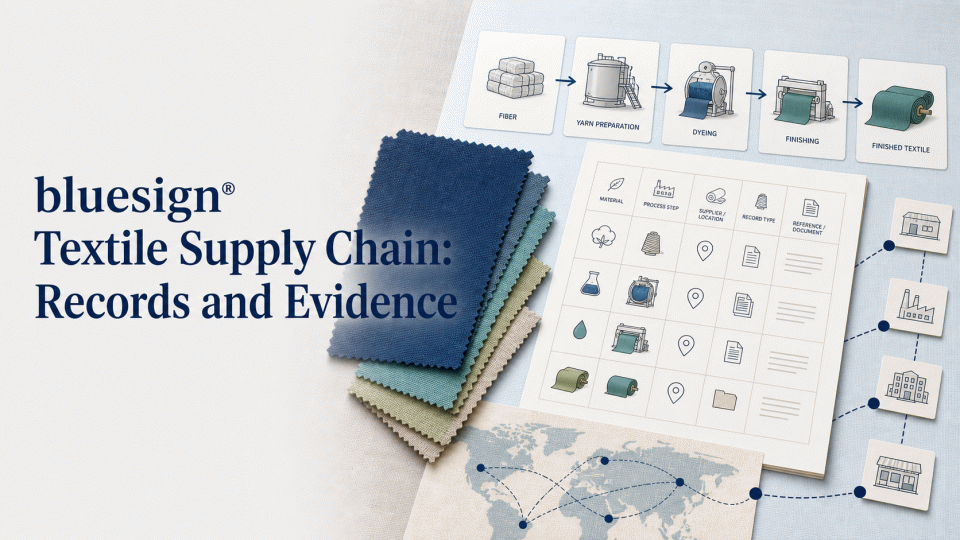
bluesign documentation is not a single generic certificate. Start by separating brands, textile manufacturers or converters, and chemical suppliers, then map materials, chemicals, production processes, supply-chain parties, and product claims into traceable records.
1. Identify the bluesign object first
Official bluesign materials distinguish services for brands, manufacturers or converters, and chemical suppliers, as well as different routes for system partnership and for assessing or certifying products, articles, and chemicals. A finished garment, an intermediate fabric or trim, and a chemical used in dyeing are different objects. A supplier’s bluesign® APPROVED or bluepass Article/Chemical Product record should not be rewritten as proof that your finished product carries the same designation.
In 2026, bluesign’s official materials describe a transition to the bluepass naming system for products, articles, and chemicals. The underlying criteria and assessment process remain in place. Use the current label guide, product record, and authorization scope when drafting a public claim.
2. Build a four-layer evidence index
Parties and roles: record each legal name, address, supply-chain role, actual manufacturing or processing site, brand or importer responsibility, and the contractual relationship between parties. A finished-product claim must also map to the entity responsible for registration or trademark use.
Materials and formulations: keep names, suppliers, batch or model references, BOM or formulation versions, SDS/TDS files, and applicable RSL/MRSL management records for fabrics, yarns, trims, dyes, and finishing agents. Chemical documentation does not replace finished-product material and supply-chain information.
Processes and data: record the actual stages—such as spinning, weaving, dyeing, printing, finishing, cutting, and assembly—together with sites, inputs, relevant environmental indicators, and improvement records. Each data point should identify its site, period, and version.
Products and claims: map SKU, style, colour, material composition, manufacturing site, finished product or article record, designation, and webpage wording line by line. Where the record is missing, state only the verified material or process fact; do not expand it into a conclusion that the whole product is certified or generally compliant.
3. Five questions for supplier documents
1. Do the legal entity and site match the actual supply chain? 2. Does the file concern a system partner, article, chemical, or finished product? 3. Can the material, formulation, batch, or style be traced to the product? 4. Are scope, version, label, and claim rules still applicable? 5. Does the page wording have a corresponding authorization, registration record, or other verifiable evidence?
4. Set boundaries for webpage wording
“Uses materials assessed through the bluesign system” is not the same statement as “this finished product may use the bluepass Consumer Product mark.” The latter depends on product category, supply chain, brand entity, applicable criteria, and authorization or registration conditions. Do not present a third-party designation as a guarantee of customs entry, platform approval, sales performance, or substitute proof of regulatory compliance. Check those questions separately for the target market, product category, and responsible party.
5. Maintain a controlled evidence table
Use one controlled table linking party, site, material or chemical, process, product, source file, and webpage claim. When a supplier, formulation, process, site, style, or label changes, record the reason, affected scope, reviewer, and new and old versions. Before sharing externally, retain the original files, source links, review date, and unresolved questions.
Sources and note
This reference is based on bluesign’s official Services Overview, Standards & Criteria, bluepass Certification, and Verify Your bluepass Product pages. Naming and claim rules may change; check the current official documents and the specific record before use.
绿色方舟(深圳)认证有限公司 can assist with evidence structuring and record mapping. Whether a requirement is met or a designation may be used depends on the applicable rules, scope, and actual evidence.


