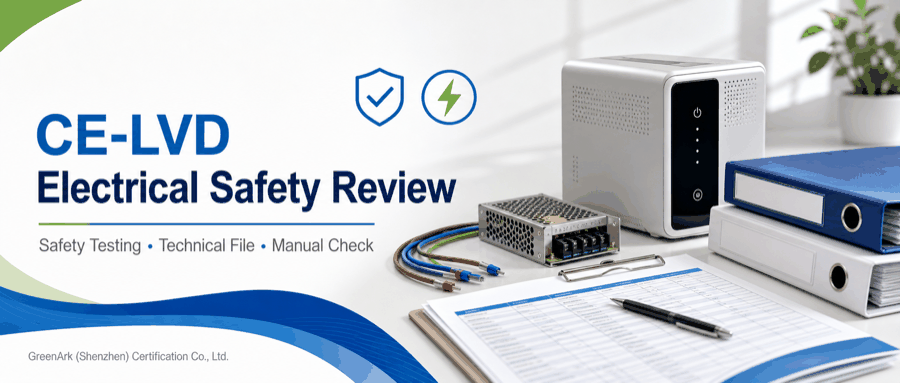
The "LVD" in EU CE-LVD certification refers to the Low Voltage Directive, which is a mandatory safety regulation of the European Union for electrical equipment. The current version is 2014/35/EU (effective from April 20, 2016, replacing the older 2006/95/EC). Its core purpose is to ensure, through harmonized safety requirements for electrical equipment, that low-voltage equipment entering the EU market does not pose electrical safety risks to users (such as electric shock, fire, etc.), and it is a prerequisite for affixing the CE marking on electrical products and legally entering the EU and European Economic Area (EEA) market.

I. Scope of Application

LVD applies to "low-voltage electrical equipment," specifically defined as:


  • AC voltage range: 50V~1000V;

  • DC voltage range: 75V~1500V.


The types of products covered are extensive, including but not limited to:


  • Household appliances (refrigerators, washing machines, microwave ovens, etc.);

  • Information technology equipment (computers, printers, chargers, etc.);

  • Lighting equipment (LED luminaires, fluorescent lamps, etc.);

  • Power tools (electric drills, cutting machines, etc.);

  • Electronic components (power adapters, transformers, etc.);

  • Low-voltage parts of medical electrical equipment (to be combined with the Medical Device Regulation MDR).


Exclusions:


  • Equipment exceeding the above voltage ranges (e.g., high-voltage power transmission equipment);

  • Equipment in specific sectors (e.g., aerospace equipment, marine electrical, military equipment, etc.), which are governed by separate specialized regulations;

  • Core functional parts of medical devices (primarily regulated by MDR, but low-voltage auxiliary components must still comply with LVD).

II. Core Safety Requirements (ESRs)

LVD sets out the mandatory provisions that electrical equipment must satisfy through the "Essential Safety Requirements (ESRs)," centered around "prevention of electrical hazards," specifically including:


  1. Protection against electric shock
    • The equipment must employ measures such as insulation (e.g., insulating materials, isolation barriers), grounding (protective earthing terminals), and current-limiting design (e.g., fuses) to prevent users from directly or indirectly contacting live parts (e.g., leakage current through metal enclosures).

  2. Protection against overheating and fire
    • The temperature rise during equipment operation must be controlled within safe limits (e.g., winding and enclosure temperatures must not exceed standard limits) to avoid insulation aging and material combustion due to overheating (must comply with heat resistance requirements in standards such as EN 60598).

  3. Mechanical and structural safety
    • The mechanical strength of the equipment must meet standards (e.g., impact-resistant enclosure, securely fastened components) to prevent exposure of internal live parts due to structural damage;

    • Moving parts (e.g., fans) must have protective designs to prevent entrapment or laceration of users.

  4. Insulation and dielectric strength
    • Insulating materials must withstand rated voltage and transient overvoltages (e.g., lightning-induced voltage) and must pass dielectric strength tests (e.g., AC 1.5kV or DC 2.1kV test, with no breakdown or flashover).

  5. Protection under abnormal conditions
    • The equipment must be capable of handling abnormal conditions such as short circuits, overloads, and power supply fluctuations (e.g., by installing overload protectors and short-circuit breakers) to avoid equipment damage or safety incidents.

  6. Marking and instructions
    • The product must bear markings for rated voltage, power, manufacturer information, etc.;

    • The accompanying user manual (which must be in an official EU language) must clearly specify safety operation, installation, and maintenance requirements (e.g., "Do not operate with wet hands," "Earthing instructions").

III. Certification Process (Conformity Assessment)

The LVD compliance process is similar to most CE directives, centered on "self-declaration primarily, with Notified Body involvement required for high-risk products," with the specific steps as follows:

1. Confirm whether the product falls within the scope of LVD

Check whether the product's operating voltage falls within the range of AC 50~1000V or DC 75~1500V; if so, it must comply with LVD.

2. Risk Assessment

Systematically identify the product's electrical safety risks (e.g., leakage, overheating, mechanical damage, etc.), produce a Risk Assessment Report, and demonstrate that risks have been reduced to an "acceptable level" through design or protective measures.

3. Compliance with Harmonized Standards

The EU has published numerous "Harmonized Standards" supporting LVD, such as:


  • EN 60335: Safety of household and similar electrical appliances;

  • EN 60950-1: Safety of information technology equipment;

  • EN 60598-1: Safety of luminaires;

  • EN 61010-1: Safety of electrical equipment for measurement, control, and laboratory use.
    Compliance with harmonized standards provides "presumption of conformity with the ESRs of LVD" and is the most convenient compliance path; if harmonized standards are not adopted, conformity with the ESRs must be demonstrated independently (requiring more detailed technical documentation support).

4. Prepare Technical File

Must include:


  • Product description (model, voltage, power, structural drawings);

  • Risk assessment report, description of safety measures;

  • Test reports (e.g., insulation resistance, dielectric strength, temperature rise tests, etc.);

  • Declaration of conformity (stating the LVD provisions and harmonized standards complied with);

  • User manual and marking samples.

5. Conformity Assessment Procedure

  • The vast majority of products: can achieve compliance through "self-declaration (Module A)," whereby the manufacturer independently reviews the technical file, confirms the product meets LVD requirements, and signs the EC Declaration of Conformity (DoC), without the involvement of an EU Notified Body.

  • High-risk or special products: if the product also falls under other directives requiring Notified Body involvement (e.g., Medical Device Regulation MDR, ATEX for explosive atmospheres, etc.), the Notified Body must concurrently review the LVD portion; high-risk products solely within the LVD scope (very rare) may also require Notified Body involvement (refer to the directive annexes).

6. Affixing CE Marking and Placing on the Market

After completing the above steps, affix the CE marking in a conspicuous position on the product (in compliance with size and format requirements) and attach the EC Declaration of Conformity, after which the product may be placed on the EU market.

IV. Key Considerations

  • Relationship with the EMC Directive: LVD addresses electrical safety, while the EMC (Electromagnetic Compatibility) Directive addresses the equipment's electromagnetic interference and immunity. Most electrical products must comply with both LVD and EMC to complete CE certification (e.g., luminaires must simultaneously satisfy LVD + EMC + ERP energy efficiency).

  • Technical file retention: must be retained for at least 10 years for inspection by EU member state regulatory authorities at any time.

  • Updates and changes: if the product design, components, or manufacturing process changes, LVD compliance must be reassessed; if the LVD directive is updated (e.g., future version revisions), new requirements must be met accordingly.

  • Notified Body qualifications: if Notified Body involvement is required, an EU officially authorized body must be selected (verifiable on the EU official website); reports from non-authorized bodies are invalid.

Summary

CE-LVD certification is the "safety threshold" established by the EU for low-voltage electrical equipment, primarily ensuring, through standardized electrical safety design, testing, and documentation, that products do not pose risks of electric shock, fire, etc. to users during use. For businesses, compliance is not only a mandatory requirement for entering the EU market but also key to enhancing product safety credibility and avoiding trade barriers (such as customs detention and fines).