Core Concepts & Scope
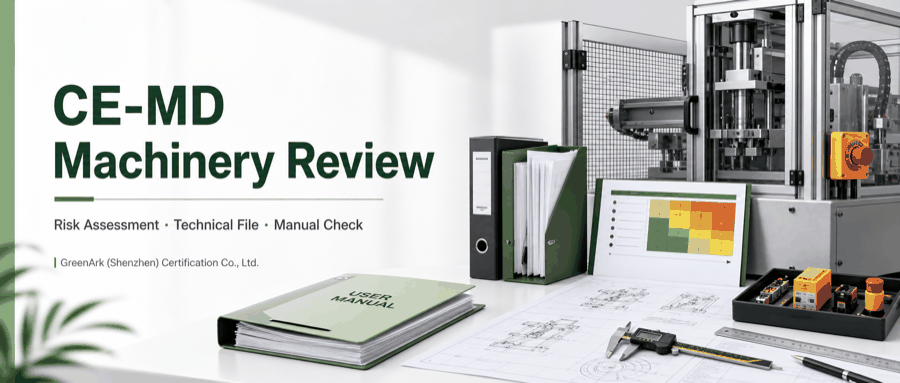
Written for OEMs of finished machinery, integrators of partly completed machinery, suppliers of safety components, and operators of cross-border industrial platforms that ship into the EU/EEA, this page from a replaces the old short File Map / File Map style draft with citation-backed content: legal identifiers, layered entry‑into‑force, a clarification of the ongoing EN ISO 12100 harmonisation delay, substantial modification liability, AI and cybersecurity evidence, and a preparation checklist that companies can implement today without waiting for the very last weeks before the 2027 hard deadline.
The current overarching EU law governing machinery CE compliance is Regulation (EU) 2023/1230 of the European Parliament and of the Council of 14 June 2023 on machinery and repealing Directive 2006/42/EC of the European Parliament and of the Council and Council Directive 73/361/EEC; it was signed on 14 June 2023, published in full on 29 June 2023 in the Official Journal of the European Union OJEU L 165, pages 1–102, and then corrected by a statutory corrigendum on 4 July 2023 in OJEU L 169/35 that corrigendum is the authoritative source for the layered application dates used throughout industry.
Under Article 54 the Regulation entered into force on 19 July 2023, but its full application date for the overwhelming majority of product conformity duties is 20 January 2027. On that same date the old Machinery Directive 2006/42/EC (MD) and the very old Council Directive 73/361/EEC are formally repealed across the EU.
Importantly, there is no grace period for new placements made on or after 20 January 2027: a machine first placed on the EU market on 19 January 2027 may still rely on the old MD, while the same machine placed one day later must conform to the Regulation.
The layered application under Article 54 must be kept distinct in platform back-office work: Article 6(7), Article 48 and Article 52 applied early as of 19 July 2023 (governing empowerments, procedures and market transparency foundations), Article 6(2)–(6), Article 6(8), Article 6(11), Article 47 and Article 53(3) applied early as of 20 July 2024 (governing CEN/CENELEC harmonisation, common specifications and annual review arrangements), and every remaining conformity duty including CE marking, the EU Declaration of Conformity, risk assessment, technical file composition and the Notified Body routes for Annex I products is governed by Regulation 2023/1230 from 20 January 2027 forward.
Formally the new text is a Regulation, not the old Directive. A Directive requires transposition by each of the 27 Member States into national law and historically produced small national divergences; a Regulation applies directly and identically across the EU and EEA with no national transposition step a fundamental shift that companies should explain clearly to their importers, distributors and Amazon/Alibaba-style platform contacts.
Every hard fact on this page traces to an auditable document: ① EUR-Lex CELEX 32023R1230 English text, including the OJEU L 165 published edition and the OJEU L 169/35 corrigendum, available at https://eur-lex.europa.eu/legal-content/EN/TXT/?uri=CELEX%3A32023R1230; ② the EUR-Lex legislative summary Safety requirements for machinery, which consolidates the Article 54 schedule and Article 3 definitions, at https://eur-lex.eu/EN/legal-content/summary/machinery-safety-requirements.html; ③ the Recommendation for Use (RfU) Sheets for Machinery Regulation (EU) 2023/1230 EC May 2026 edition issued jointly by the machinery Notified Body community, with the horizontal 00‑series RfUs applicable to all Annex I categories and vertical RfUs per product family; ④ the May 2026 industry common position independently confirmed by France‑based ASI Industrie in an April 2025 article updated May 2026 that EN ISO 12100:2010+A1:2021 remains the harmonised reference edition that fully preserves the presumption of conformity under the Regulation as of 20 January 2027, because the revision process for ISO 12100 has repeatedly overrun and missed the original CEN target; and ⑤ the confirmed CEN publication on 22 July 2026 of EN ISO 12100:2026, which replaces the prior 2018 edition under CEN rules and becomes independently mandatory on 1 October 2026 for CEN member states.
Key Rules & Regulatory Points
Until that revised edition is formally cited in the OJEU harmonised standards list it does not create a statutory presumption of conformity for MR, but companies can already incorporate its new clauses on digitised risk assessment, human‑robot collaboration validation, and AI‑assisted control system verification pathways into their design files.
Entities and products in scope for CE‑MR compliance include: finished machinery placed on the EU market or put into service; related products defined by the Regulation (exchangeable equipment, safety components, lifting accessories, chains/ropes/webbing, removable PTO drive shafts); and partly completed machinery (quasi‑machinery).
Compared with the old MD the MR explicitly brings into scope physically complete machines that have no software yet but only require a software download to function, safety‑function software sold separately (treated as a safety component), used machinery later distributed again, and any machine that has been substantially modified outside the OEM's original plan.
This means cross‑border e‑commerce transactions involving second‑hand industrial machine tools, production lines retrofitted with vision cells or collaborative robots, and standalone upgrade‑grade safety control modules all land under MR supervision.
Out of scope are the overall transport functions of air/water/rail vehicles (though machinery installed on those vehicles remains in scope), self‑built research prototypes that are never placed on the market, military/law‑enforcement special machinery covered by Member State national exemption clauses, nuclear‑facility dedicated equipment, and single machines imported temporarily for non‑EU use and then re‑exported.
When a customer or platform asks, Does my machine need CE‑MR? the default answer should first be traced to Article 2 and Article 3, not to a generic yes/no by product appearance.
Misconception 1: As long as a machine already has a CE mark it can keep circulating after 2027 with no further review. False. The MR is anchored to the date of first placing on the market: a machine first placed before 20 January 2027, never substantially modified, and never redistributed as a new placement may keep relying on its old MD compliance file.
Any first placement made on or after 20 January 2027 must meet the Regulation and cannot invoke the old MD.
Practical Checklist
Misconception 2: EN ISO 12100 is being revised so I should pause all risk assessment work and wait for the new OJEU citation. False. The 2026 Notified Body common position and the ASI Industrie May 2026 update both state explicitly that EN ISO 12100:2010+A1:2021 remains fully applicable and valid for the 20 January 2027 deadline.
Misconception 3: MR is just MD renamed; swapping the letterhead on an old DoC is enough. False. The biggest change old drafts miss is the new definition of substantial modification in Article 3(16): any physical or digital modification that is not planned by the original manufacturer and that may introduce a new hazard or increase an existing risk turns the party performing it into a new manufacturer under the law, obliging it to redo the full risk assessment, build a full technical file, issue a fresh EU Declaration of Conformity and apply the CE marking again.
This covers system integrators, line‑retrofit houses and third‑party software upgraders areas where the old MD left grey zones.
Misconception 4: Self‑declared machinery never needs a Notified Body. False. For Annex I Part A high‑risk categories (woodworking machines, press brakes, injection/compression moulding machinery, hand‑held chainsaws, personnel‑carrying lifting devices and others) Notified Body involvement remains mandatory.
For Annex I Part B categories the internal production control (self‑declaration) route is only permitted when the company has applied harmonised standards or common specifications, cited in the OJEU, that completely cover the applicable essential health and safety requirements (Annex III); otherwise a Notified Body route still applies.
Misconception 5: AI control and cybersecurity are software‑engineering topics that do not belong in the compliance file. False. Article 7 of the Regulation explicitly requires documented safety validation for safety‑function software, AI decision logic, algorithm iterations, firmware/OTA updates, and for connected machinery tamper protection, intrusion protection and access‑control design.
The August 2026 robot‑industry practical checklist (EU Machinery Regulation 2023/1230: Essential Checklist, Theresarobotforthat, dated 9 August 2026) lists AI self‑evolving behaviour safety review and post‑FOTA risk‑assessment re‑run among the non‑negotiable evidence items.
Misconception 6: Keeping the technical file for 5 years is good enough. False. The MR requires the technical file, copies of the EU DoC and all safety‑information records to be retained for 10 years from the day after the last unit of the relevant model is placed on the market; it also requires manufacturers to make the complete file available to Member State competent authorities in electronic format on reasonable notice.
Common Pitfalls
Sections 1 and 2 above, where legal CELEX numbers, OJEU volume references, exact article numbers and calendar dates are provided, are verbatim factual summaries of publicly available EU legislation and may be cited directly in internal compliance set‑ups or platform audits.
Scope conclusions in Section 3, however, are generic by design; a written scope confirmation for a specific machine, model, SKU or production line, accompanied by nameplate photos, electrical drawings and intended‑use statements, should be obtained from a before the conclusion is used for customer‑facing claims.
The misconception list in Section 4 helps companies avoid high‑frequency errors in platform back‑office work and dialogue with buyers; it does not replace a design‑level assessment of whether a given machine meets the Annex III essential health and safety requirements.
Scope inventory by SKU/family: Pull one line per SKU covering BOM, nameplate, instruction manual, intended use, serial numbering rule and historical EU order volume; tag each line with one of five roles under the Regulation: finished machine, partly completed machinery, related product, safety‑function software, or party that performs a substantial modification.
Date‑backwards project scheduling: Hard‑wire the first placing on the market date into every MR project row. Any first placement on or after 20 January 2027 must not be executed under the old For existing old‑MD projects, confirm the remaining validity of existing MD certificates and test reports, the sample‑version mapping and the boundary of coverage for later upgrades or software modifications.
Risk‑assessment baseline build (do not pause): Complete the EN ISO 12100 three‑step risk reduction inherently safe design → safeguarding and complementary protective measures → information for use under the existing EN ISO 12100:2010+A1:2021 framework.
Keep dedicated annex chapters ready for AI, cybersecurity and collaborative robot evidence. For safety control functions continue to back claims with EN ISO 13849‑1 PL or IEC 62061 SIL validation data. When the OJEU later cites EN ISO 12100:2026 or a revised Annex ZA, only add supplementary records do not restart the whole file.
10‑year traceable electronic technical file: Structure the file into modular volumes that each carry an owner, date, applicable SKU/batch and reviewer name: general assembly and key sub‑assembly drawings; full risk assessment and risk‑reduction evidence; electrical/pneumatic/hydraulic schematics; bill of materials and traceability for critical safety components; harmonised‑standard and common‑specification citation list; type‑test/validation reports; CE marking and nameplate artwork; safety information and manuals in original + translated languages; software version and AI/algorithm safety validation; the EU DoC issuance workflow record; and identity/address data for all four economic operators (manufacturer, authorised representative if any, importer, distributor).
Consequences & Tips
Contractual substantial modification accountability line: Insert a substantial modification clause into purchasing contracts, system‑integration contracts and retrofit contracts. The clause should specify which party assumes new‑manufacturer liability when a modification meets the Article 3definition, who issues the replacement DoC, and how the old batches versus retrofitted units are traced.
This prevents liability gaps when downstream platforms or end‑customers escalate non‑conformity cases.
High‑risk route verification: Cross‑check the product family against Annex I Part A to confirm NB involvement. For Part B ordinary machinery, verify before issuance that the harmonised standards or cited common specifications fully cover the applicable Annex III ESHR clauses; if coverage gaps remain, a Notified Body route still applies by regulation.
On CE‑MR (Regulation 2023/1230) compliance projects performs: scope determination, regulation‑to‑harmonised‑standard edition matching, technical file scaffolding and review, risk‑assessment methodology design, Chinese/English authoring of manuals and safety information, and liaison work with EU authorised representatives, test houses and Notified Bodies.
For Annex I Part A cases that require NB involvement the team connects the client to EU Notified Bodies that hold the corresponding machinery category scope and supplements the submission with additional technical evidence as the NB requests.
does not substitute for the legal manufacturer when signing the EU Declaration of Conformity, and does not issue the legally final risk‑assessment conclusion on the manufacturer's behalf. All formal project findings, signing parties, applicable SKU ranges and validity periods are set out in the countersigned engagement contract and its written deliverables.
Internal R&D prototypes or machines that never enter the EU market are not covered under the standard scope and can be handled through a separate bespoke consulting arrangement.
Not sure which CPF pathway fits your product?
Send us your product category, materials and current certificates. We will review the available certification pathway.