Core Concepts & Scope
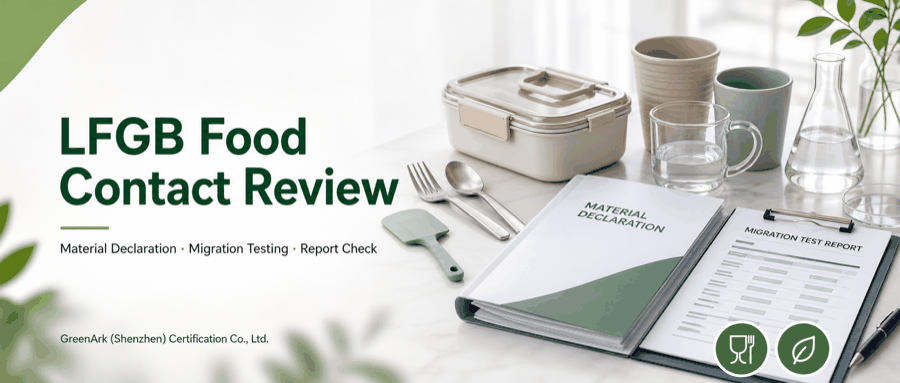
Factual scope and effective dates: This guide is prepared based on publicly available documents of the German Lebensmittel- und Futtermittelgesetzbuch (LFGB, the Food and Feed Code, historically still referred to in the supply chain as LMBG by older practitioners), including LFGB § 30 (articles intended for contact with food must not endanger human health) and § 31 (sensory requirements and release), the notification and penalty mechanisms under LFGB § 33, the German Federal Institute for Risk Assessment (BfR) recommendations on food-contact materials (covering plastics, silicones, coatings, metals, paper and board, rubbers, wood and bamboo etc.), the German Federal Office of Consumer Protection and Food Safety (BVL) market-surveillance sampling practice, EU Regulation (EU) No 10/2011 on plastic materials and articles intended to come into contact with food, and customer- / marketplace-specific audit language commonly used for PAHs (polycyclic aromatic hydrocarbons), BPA (bisphenol A), primary aromatic amines (PAA), heavy metals (Pb, Cd, Cr VI, Ni etc.), formaldehyde, N-nitrosamines, phthalate plasticisers, melamine and formaldehyde migration, silicone volatile organic compounds (VOCs), paper-board PFC and mineral oil hydrocarbons (MOSH / MOAH), and bamboo / wood biocide preservative assessments.
Also included are Germany-specific Declaration of Conformity (DoC / VCP) wording and sales dossier review patterns commonly expected by German state-level market surveillance bodies. Any concrete migration limits, BfR recommendation revisions, EU 10/2011 clean-down updates, BVL public notification cases, or post-2025 BfR / EU changes around BPA, recycled plastics and bamboo-melamine composites must always be cross-checked against the latest official versions published by the German BfR, the German BVL, EUR-Lex and the federal states.
Key Rules & Regulatory Points
Nothing in this guide should be treated as a substitute for the formal regulatory text or for a third-party test report.
Typical assistance includes: determining the applicable regulation / standard combination (LFGB § 30 / § 31 / BfR chapters / EU 10/2011 / marketplace or customer annexes), building the ten core evidence fields in Section 2 and mapping each field to source documents, verifying the three-layer consistency across listing / back-office / customer scripts, identifying the six breakpoints listed in Section 4, structuring cross-role versioned archives, preparing laboratory sampling scopes (component matrix, matched simulants and contact conditions, infant annex and § 31 sensory attachments), drafting the DoC template, preparing the marketplace compliance-field and customer-questionnaire templates, and structuring the German manual / label outlines that the enterprise can then hand to a test laboratory, translation vendor, EU authorised representative or importer for final review.
Practical Checklist
's engagement is by nature evidence organisation, gap identification, and wording-compliance cross-check, performed on the basis of the enterprise's existing finished articles, materials, recipes, colour pastes, coatings, test reports and raw-material supplier dossiers.
cannot replace a third-party laboratory in issuing EN 1186 / EN 13130 / DIN / BfR / LFGB § 31 reports, cannot substitute for the final compliance determination of the German BfR, BVL or Länder market-surveillance bodies, and cannot deliver a this article has fully passed LFGB § 30 / § 31 or absolute zero migration conclusion without a test basis.
Common Pitfalls
The final outcome whether supplementary testing is required, whether a DoC should be issued, and whether the dossier will pass a platform or German customs / market spot-check ultimately depends on the real material system of the product, the completeness of the supporting evidence, the laboratory method and results, and platform process or regulatory conditions.
If you would like to help build or re-check the public-facing documentation for your LFGB topic, please package your product models, your bill of components with materials (especially silicone / coatings / ceramic glazes / bamboo-wood / rubber seals etc.), your target sales form (B2C marketplace / B2B distribution / retail / infant channel), the number of SKUs and colours, any existing report numbers and results, your raw-material supplier files, and your platform's or customer's specific LFGB requirements.
Consequences & Tips
Then send the package to the team below.
Not sure which CPF pathway fits your product?
Send us your product category, materials and current certificates. We will review the available certification pathway.