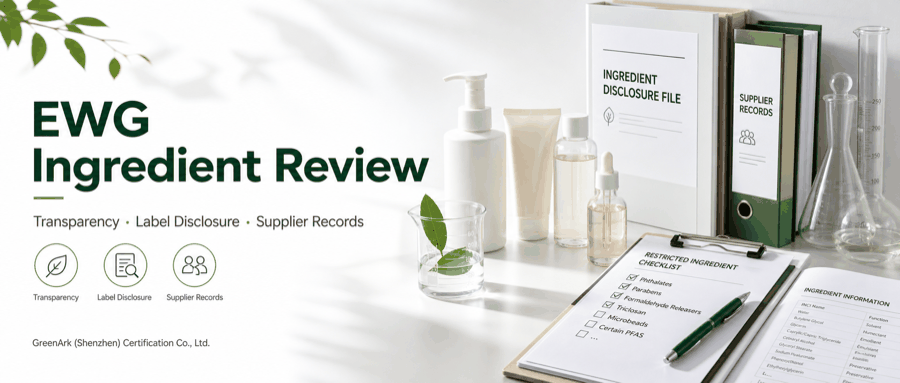
EWG (Environmental Working Group) certification is a consumer product safety certification system introduced by the U.S. non-profit environmental organization EWG, designed to help consumers identify truly safe and healthy products through rigorous ingredient screening and manufacturing standards. The following is a detailed analysis of this certification:

I. Core Value and Objectives of the Certification

EWG was founded in 1993 and focuses on researching chemicals in consumer products that may pose health risks, advancing ingredient transparency and safety upgrades. Its certification system (EWG Verified®) is grounded in scientific research and independently assesses the health risks of product ingredients, environmental impacts, and corporate manufacturing practices, ensuring certified products meet one of the world's most stringent safety standards. Certification objectives include:


  • Health Protection: Eliminates over 300 high-risk ingredients such as carcinogens and endocrine disruptors, reducing health risks including allergies and reproductive toxicity.

  • Environmental Advocacy: Promotes sustainable production processes and reduces ecosystem damage, for example by requiring ingredients to be biodegradable.

  • Market Trust: Provides consumers with a transparent basis for choice through green certification labels (such as “EWG Verified™”), enhancing brand credibility.

II. Certification Scope and Standards

(A) Product Categories

EWG certification is widely applicable to the following areas:


  1. Personal Care Products: Shampoos, sunscreens, toothpaste, nail polish, etc.

  2. Cleaning Products: Laundry detergents, kitchen cleaners, bleach, etc.

  3. Maternal, Infant, and Children's Products: Diapers, baby care products, children's mattresses, etc.

  4. Pet Care Products: Pet shampoos, toothpaste, wipes, etc.

  5. Household Products: Mattresses, floor cleaners, etc.

(B) Evaluation Criteria

Certification standards vary by product category, but the core principles include:


  1. Ingredient Safety

    • : Prohibits over 13,000 ingredients on EWG's “Unacceptable List” (e.g., parabens, phthalates) and restricts over 9,000 ingredients on the “Restricted List.”

    • Products must achieve a “green” rating (Level 1-2 low risk) in EWG's Skin Deep database.

  2. Ingredient Transparency

    • : All ingredients must be fully disclosed, including specific components within fragrance mixtures; vague labeling such as “fragrance” is prohibited.

    • Compliance with EU labeling requirements for fragrance allergens and nanomaterials.

  3. Good Manufacturing Practices

    • : Enterprises must comply with current Good Manufacturing Practices (cGMP) and are subject to random inspections.

    • The supply chain must provide raw material traceability records to ensure sustainability.

  4. Health and Environmental Impact

    • : Evaluates the ecotoxicity of ingredients to aquatic organisms and soil, and requires packaging materials to be recyclable or biodegradable.

    • Infant products must additionally pass special standards such as dermal penetration coefficient adjustments and oral contact testing.

III. Certification Process and Fees

(A) Application Process

  1. Pre-Assessment: The enterprise submits an ingredient list, and EWG's laboratory performs a simulated scoring (cost approximately USD 2,000).

  2. Formal Application: Submits complete formulations, raw material safety data sheets, production process descriptions, and other documentation.

  3. Sample Testing: Verifies ingredient authenticity through third-party laboratories (testing costs approximately USD 15,000-30,000).

  4. Review and Approval: EWG's scientific team reviews the documentation; upon approval, a licensing agreement is signed and the enterprise obtains label usage rights.

  5. Ongoing Surveillance: At least one unannounced inspection per year; violators will be permanently delisted.

(B) Fee Structure

  • Application Fee: Approximately USD 500.

  • Evaluation Fee: Charged per product SKU; the evaluation fee per individual product is approximately RMB 8,000.

  • Annual Licensing Fee: Tiered fee based on the enterprise's annual sales revenue; agreement valid for 3 years, renewable.

  • Testing Fee: Third-party laboratory testing costs approximately USD 15,000-30,000.

IV. Certification Authority and Market Impact

(A) International Recognition

  • Scientific Endorsement: Certification standards are developed by a professional team of toxicologists, chemists, and other experts, integrating regulatory data from the FDA, EU REACH, and other jurisdictions.

  • Market Trust: Over 70% of consumers in European and American markets prefer products with the EWG-certified “clean label”; platforms such as Amazon require specific categories to pass this certification to obtain the “Climate Pledge Friendly” label.

  • Premium Pricing Power: Certified products command an average premium of 30%-50% in European and American markets, with a 45% increase in Amazon conversion rate and a 22% increase in repurchase rate.

(B) Industry Impact

  • Driving Formulation Upgrades: International brands such as Procter & Gamble and Unilever are phasing out controversial ingredients like silicones and sulfates to pass certification.

  • Advancing Regulatory Improvements: EWG standards have been adopted by policies such as the EU's Sustainable Chemicals Strategy, becoming a pre-compliance solution for exports.

V. Application and Challenges in China

(A) Current Market Landscape

  • Cross-Border E-Commerce Adoption: Chinese consumers can purchase certified products through cross-border e-commerce, such as Koch children's sunscreen and Attitude laundry detergent, etc.

  • Local Brand Exploration: Six Chinese cleaning brands including Blue Moon and Liby have obtained certification, while beauty brands such as Winona and Yuze have introduced EWG ratings as a marketing highlight.

  • Policy Compatibility: Certified products must also comply with Chinese regulations such as the Safety and Technical Standards for Cosmetics; for example, heavy metal content must be at least 50% below national standard limits.

(B) Key Challenges

  • Awareness Gap: Domestic consumer awareness of EWG certification is relatively low, and some enterprises engage in “pseudo-certification” abuse (e.g., labeling products as “EWG compliant” without official certification).

  • Cost Pressure: Formulation transitions (e.g., replacing petroleum-based surfactants with plant-based ones) and testing costs may increase the burden on enterprises, particularly for SMEs.

  • Standards Conflicts: There are differences between EWG's “precautionary principle” (suspect = prohibit) and China's regulatory approach emphasizing empirical science, requiring enterprises to adopt a “dual-track” production model.

VI. Controversies and Limitations

  1. Scientific Rigor Controversy
    • : Critics argue that EWG ratings over-rely on the “precautionary principle,” lack dose-response analysis, and may misclassify low-concentration safe ingredients as high-risk.

    • For example, the FDA considers parabens safe within regulatory limits, but EWG still lists them as an ingredient to “avoid.”

  2. Conflict of Interest Concerns
    • : EWG profits through programs such as Amazon Associates, which has raised concerns about potential impacts on evaluation objectivity.

    • Certain certified products (e.g., Roc retinol cream) are rated high-risk in its database, yet EWG still profits through affiliate links.

  3. Evaluation Methodology Limitations
    • : The database does not fully incorporate actual product usage amounts or exposure scenarios, potentially causing a disconnect between theoretical and actual risk.

    • Allergy risk assessments for plant extracts do not differentiate between purified ingredients and crude extracts, sparking industry controversy.

VII. Consumer Selection Recommendations

  1. Prioritize Certified Products: When purchasing personal care and maternal/infant products, look for the “EWG Verified™” mark; certified product details can be queried through the EWG official website database.

  2. View Ratings Rationally: EWG ratings can serve as a reference but should not be treated as the sole standard; selections should be made based on individual skin type and usage context.

  3. Pay Attention to Ingredient Lists: Avoid products with vague labels such as “fragrance” or “preservatives”; prioritize simplified formulas with fewer than 15 ingredients

  4. Beware of Pseudo-Certification: Products merely labeled “EWG rated” or “EWG compliant” may not have passed official certification; verify information on the official website.

VIII. Future Development Trends

  1. Standard Upgrades: In 2024, EWG added regional adaptability provisions and introduced blockchain technology to enhance supply chain transparency.

  2. Scope Expansion: Certification may extend from personal care and cleaning products to areas such as food packaging and building materials.

  3. Digital Transformation: EWG plans to launch an app with QR-code-based ingredient traceability lookup, further enhancing consumer engagement.

  4. International Cooperation: Strengthening mutual recognition with certification systems such as the EU's ECOCERT and Japan's COSMOS to promote globally harmonized safety standards.

Conclusion

EWG certification provides consumers with trustworthy safety choices through stringent ingredient controls and transparency requirements, while driving the industry toward healthier and more environmentally friendly practices. Despite scientific controversies and cost challenges, its widespread recognition and market premium power in European and American markets make it an important avenue for enterprises to enhance competitiveness. For consumers, leveraging this certification information wisely, combined with individual needs and scientific understanding, can more effectively reduce exposure to harmful chemicals and safeguard health and the environment.