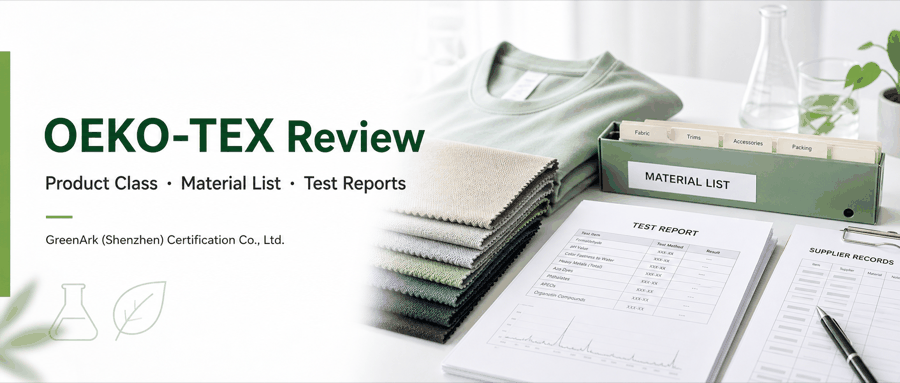
This article breaks down an important OEKO-TEX ASIN Compliance Overview topic for cross-border sellers, brand owners and compliance teams. We cover five practical layers: Core Concepts, Key Rules, Documentation, Pitfalls, and Consequences.
✅ In 2026, platform and customs enforcement are becoming data-driven. Amazon marketplaces, EU market surveillance, and Japan METI/Amazon.co.jp all run periodic sweeps. A missing certificate, an expired test report, or a broken traceability chain today can easily turn into a listing suspension, import detention, or product recall.
🔹 Cross-reference the CN checklist tables. Below is the English-language reference material you can forward to overseas buyers, compliance officers, and Amazon seller support teams.
Core Concepts & Scope
Define the product regulatory scope, the applicable market, and which laws apply (mandatory customs, platform-mandatory, and buyer private-label audits). Many recalls begin because the wrong regulation was applied — e.g., using FDA food contact results as Japan MHLW food contact compliance.
Take the product HS code / CN code, match against annex tables, and draw a line between mandatory (customs/import non-negotiable), platform mandatory (listing gate), and customer / retailer private-label mandatory (big buyer audits).
Key Rules & Regulatory Points
Pull the key rules from the official regulation as listed in the CN version. For each rule, write down the applicable thresholds, in-force date, grandfather clauses, and any platform enforcement date that is earlier than the official date (platforms often enforce 3–6 months before official customs enforcement).
Common 2026 additions across all markets: PFAS / POPs updates, PPWR packaging reuse & recycled content, CBAM CN codes for specific product families, EUDR geolocation requirements, battery digital passport roll-out, and the EU Green Claims Directive which bans unsubstantiated green claims.
Documentation Checklist
Organize documentation in four blocks: (a) Company & brand files (business license, trademark R/TM, brand authorization, ISO if any); (b) Technical files (spec sheets, BOMs, risk assessments, manuals, label artwork with warnings & marks in local languages); (c) Test reports (ISO 17025 / CMA / CNAS labs, reports within 24 months, parameter sets covering the full standard); (d) Supply chain traceability (purchase orders, invoices, transport documents, CoC & TC certificates where applicable).
⚠️ Every certificate must match the legal entity of the listing owner / importer of record. A supplier certificate in a different company name does NOT count as valid platform evidence.
Common Pitfalls
Avoid these four pitfalls that routinely cause returns, detentions, or suspensions: (1) using a competitor or friend's certificate for your SKU; (2) partial testing (only a subset of the required parameters); (3) brand/importer name mismatch between certificate and Amazon account / import declaration; (4) certificates submitted after they are already expired.
For chemical-heavy categories (toys, textiles, cosmetics, food contact, electronics): keep RoHS, REACH SVHC, POPs, Prop 65, and Japan MHLW migration tests all refreshed within 24 months, and store the original PDF files with lab letterheads, wet seals, signatures, and report numbers.
Consequences & Timeline
Consequences and timeline: Fines are typically 2% to 5% of global revenue for serious breaches, plus import bans, recalls, and platform-level de-listing. Enforcement dates in this document must be put on a shared calendar. Prime Day / Black Friday / Singles Day peak periods are usually preceded by 1–2 month proactive platform sweeps. Schedule renewals 8–10 weeks before the actual certificate expiry date.
Compliance is a recurring maintenance job, not a one-and-done purchase. Annual surveillance audits, supervisory audits for FSC/GRS type schemes, and updated product carbon footprints each calendar year are all part of the normal upkeep.